Bradshaw
News of this year’s Nobel prizes won, as always, mostly by men is a reminder that Dr. Beverly Guirard was a big contributor to the research that won the prize for chemistry in 1953, but didn’t get even an honorable mention.
The award went to Dr. Fritz Albert Lipmann, who was a pioneer researcher of something called coenzyme A, which has to do with controlling the chemistry of cells in all sorts of organisms.
I looked it up, read two articles about it, and still can’t tell you exactly what he did. But it was important stuff and his discoveries were substantially aided by Dr. Guirard’s work, in the words of one biography, “to establish the value of pantothenic acid on the coenzyme” (which is scientific jargon for “something ordinary people will never understand”).
Lipmann studied medicine in Germany, but like many other Jewish scientists in Germany came to the United States in 1939 as the storm clouds of World War II began to gather. From 1949 to 1957 he was professor of biological chemistry at Harvard Medical School.
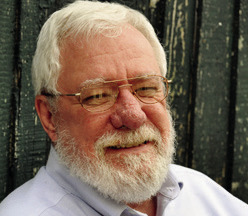
Guirard was the eldest of four daughters of Robert J. and Ella French Guirard of St. Martinville. She graduated from St. Martinville High, received her bachelor of science degree in 1936 from Southwestern Louisiana Institute (now UL-Lafayette), a master’s in organic chemistry in 1938 from LSU, and her PhD from the University of Texas in 1945.
Dr. Lipmann presented the paper that brought him to the attention of the Nobel committee at an American Chemical Society symposium in Austin and in that presentation acknowledged “his indebtedness to the research done by Dr. Guirard,” according to a Teche News article.
She did that research at the University of Texas until 1956, then moved to the University of California at Berkeley, and returned to Texas in 1976, working there until her retirement in 1990. According to her obituary, her “lifelong work was as a research biochemist, focusing on the synthesis, metabolism, and function of the B6 vitamin group.”
She held appointments in three different departments, chemistry, biochemistry, and bacteriology, at Texas and was one of the few women who held membership in those days in organizations such as the American Association for the Advancement of Science, the American Chemical Society, the American Society of Biological Chemists, and the American Society for Microbiology.
According to her obituary in the Austin American she was also much involved with church and civic organizations, including the Austin food bank, Church Women United, the Paulist Associates, and the social concerns committee at the university’s Catholic center. The Beverly Guirard endowment was established at that center in her honor.
What is not mentioned in her obituary, or any of the other articles that I have found about her, is that Dr. Guirard broke ground not only in biochemistry but for women in every branch of science. It was a significant event when she received her doctorate. In those days, chemistry and physics, and most other scientific fields, were almost exclusively the domain of men. It was a rare woman who could break into the field, move up in the ranks, and receive peer recognition. She should have received a prize for that alone.
Dr. Guirard died at the age of 90 in her home in Austin on January 17, 2006. She is buried in St. Martinville.
You can contact Jim Bradshaw at [email protected] or P.O. Box 1121, Washington LA 70589.