On Friday night, two high schools separated by ten miles can seem like opposing civilizations.
We wear different colors. We sit on opposite sides of the field. We cheer when “we” score and groan when “they” do. Depending on how seriously people take high school football, a few fans may even seem prepared to defend their community’s honor personally.
Then Saturday arrives. Some of the same people who were “them” twelve hours earlier may be sitting beside us, cheering for a Mississippi team against one from another state.
And when the Olympics come around, the circle grows larger still. Mississippians, Alabamians, Californians and New Yorkers suddenly become Americans cheering together against competitors from other countries.
The people didn’t change. The boundary did. We tend to think of “us” and “them” as descriptions of different kinds of people. Often they just describe where we happen to have drawn the line—and those lines move more than we realize.
Consider Louisiana. Before 1803, someone living in New Orleans wasn’t American, simply because the territory belonged to France. Then governments signed papers, money changed hands, and the boundary of the United States moved west.
The residents stayed exactly where they were. The line separating “us” from “them” had moved around them.
Our differences can be real. We may hold different religions, politics, cultures and traditions, and not all of those differences are trivial—some are worth taking seriously, even worth defending. But which of them we treat as the line that divides us from everyone else is rarely fixed. It shifts with the situation, and it shifts more easily than we like to admit.
Watch children on a playground when they don’t know anyone.
Before they have someone to play with, they’re remarkably willing to play with whoever’s around. They go looking for common ground.
“You like Pokémon?” “Me too.” And they’re off. This is the part we tend to miss. Before we have a group, commonality is precious—we search for the thing that connects us. Once we have a group, the search reverses. We start noticing what separates the people outside it. The same instinct that hunted for sameness now hunts for difference.
That’s when categories like Republican and Democrat, Christian and non-Christian, Southerner and Northerner, American and foreigner can begin to take on greater importance. They start to feel like permanent divisions between fundamentally different kinds of people.
But which category we emphasize depends heavily on which group we’re standing inside at the moment.
I’m reminded of this every Sunday when our local St. Vincent de Paul conference meets. Several members were born in other countries—England, Scotland and the Netherlands.
Most of the time, I forget that entirely.
They’re simply people I know and care about. Usually it takes a stranger hearing an accent and asking where someone is from to remind me that, by one of the categories we use to sort the world, we belong to different groups.
Nothing about the person changed when the stranger noticed the accent.
Only the category became visible. There’s nothing wrong with forming groups. Groups give us belonging, identity, community and people willing to help one another.
The danger comes when the lines we draw to decide who belongs begin deciding something else—whose needs matter, whose suffering counts, who deserves our concern.
That’s when an ordinary distinction between “us” and “them” becomes something far more consequential.
Maybe that’s worth remembering the next time we find ourselves talking about what “they” are like.
The rival across the football field on Friday night may be standing beside you Saturday, cheering for the same team. In another place, on another day, with a slightly larger circle drawn around you both, the person you’re calling “them” might turn out to be one of “us.”
The people didn’t change. The boundary did.
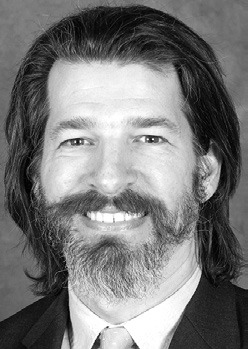
Dr. Raymond E. Barranco is Professor of Sociology at Mississippi State University and the creator of the Public Dignity Standard.