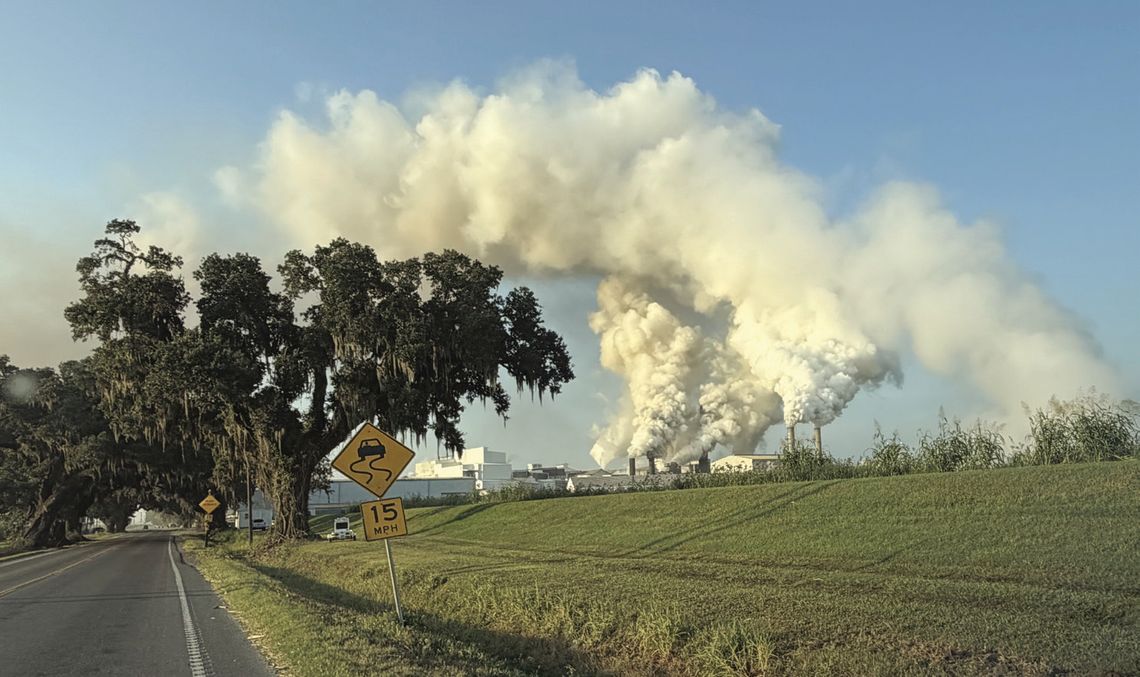
– The Louisiana Sugar Cane Co-Operative factory just north of St. Martinville began processing sugar cane on Sept. 15 and processed about 68,000 tons of cane over the first six days of the season, LaSuCa Ag Division Manager John Hebert said.
The factory expects to process a little over 20,000 tons of cane a day over the entirety of the season and was at over 21,000 tons on Sunday, the first day over 20,000 tons.
LaSuCa began taking in sugar cane for grinding on Sept. 15 with the Theoretical Recoverable Sugar value from the core sampler coming in at 220 pounds per ton on a daily basis, slightly higher than the norm.
“I would say that the weather this season has been anything but consistent,” Hebert said. “We had basically a drought in the spring, to the point that we were fortunate when that drought took place because the days were too short and the temperatures were too cool for that crop to really be attempting to actively grow rapidly.
Cane
“And then all of a sudden we started getting heavy rains every day for a long period of time. And then it stopped again. It’s not all that odd for us to see those back and forth weather trends here in Louisiana, but it’s definitely been anything but consistent. I’d say that we had good temperatures all year. I can’t say that besides the early spring we ever got dry enough to hurt the crop. Most places by the time the rain would start falling again it was just in time for the crop to not slow down. ”
Hebert said that each year the previous year’s production has been exceeded for about eight years and that trend is expected to continue this year.
“Last year we processed 2,049,800 tons,” he said. “This year’s going to be about 100150,000 tons more than that, somewhere around 2,150,000 to 2.2 million tons.”
A couple of cane varieties in the last few years that are beginning to fill more acreage in the nine parishes that contribute to the factory’s processing, and those varieties are contributing to the higher sugar, Hebert said. But the higher sugar yield is across all varieties, he added.
A three-way partnership among the LSU AgCenter, the USDA and the American Sugar Cane League work to develop varieties of sugar cane in Louisiana. That effort is to produce more productive, more resilient varieties of cane than are currently growing, which has quadrupled the average sugar per acre over the past 100 years, Hebert said.
“It’s all about just continuing to yield better,” he said. “Part of that is disease resistance. Part of that is insect resistance. Part of that is ratooing ability or stubble ability, the ability for a perennial crop to continue to regenerate year after year. The sugar cane plant has one of the most complex genetic makeups of any organism in the world, literally. And they’re constantly working with new methods to try to pinpoint certain characteristics and improve on them in order to have more productive varieties.”
The pasture mealey bug has developed into a pest that is an emergency in the industry, in some areas more than others, with growers having to spend millions on pesticide applications trying to combat the problem in the state.