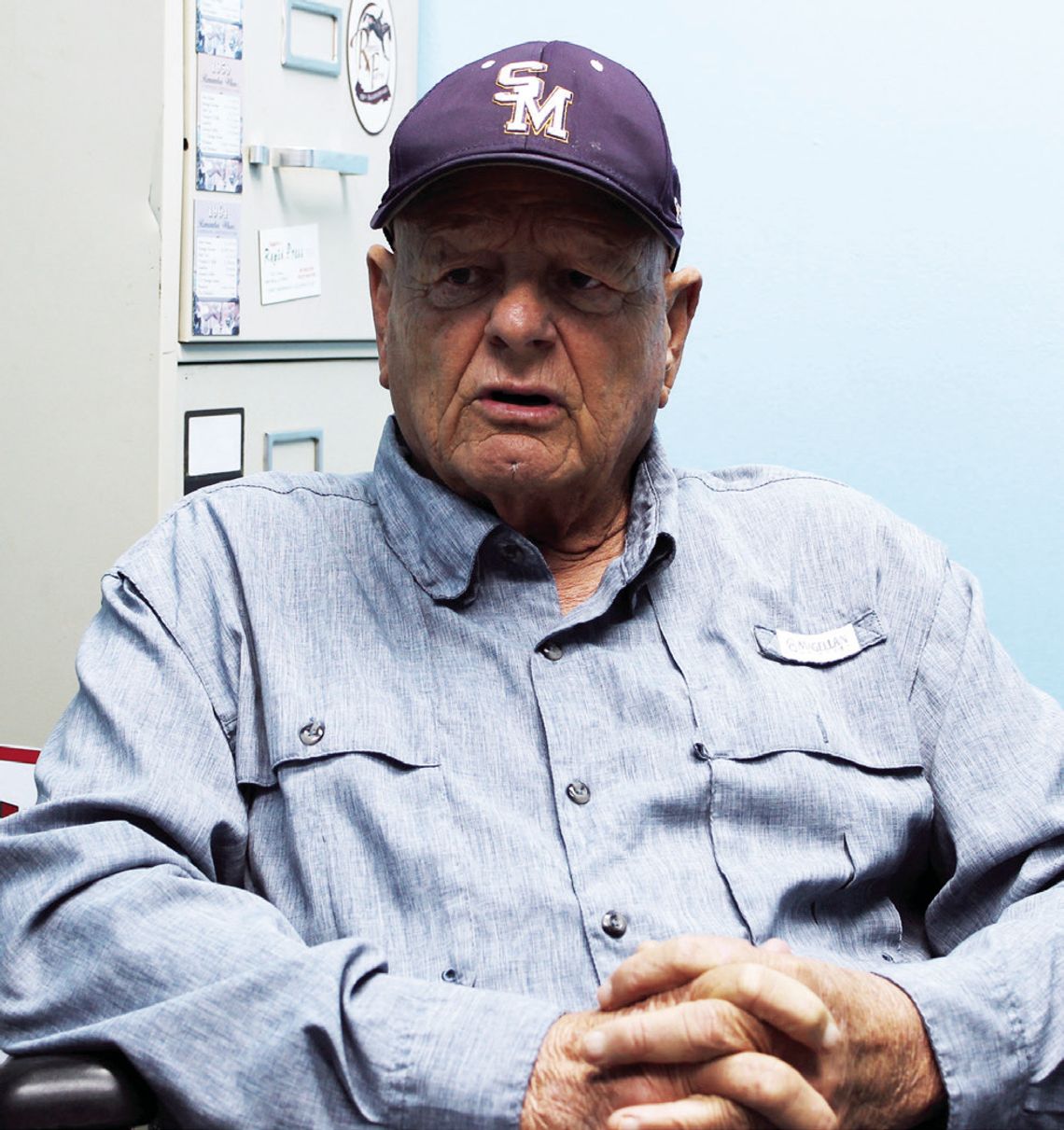
– Carroll Delahoussaye built quite a legacy in 28 years as the head football coach at St. Martinville Senior High.
Delahoussaye led the Tigers to Class AAA state championships in 1981 and 1984 and a Class AAAA state runner- up finish in 1985 on the way to winning 72 percent of the games he coached for 246 career wins.
The school’s stadium will be officially renamed in his honor at halftime of Friday’s first home game of the 2026 football season when the Tigers (1-1) take on New Iberia Senior High (1-1).
“When they first brought it up, when we first found out that they were going to do it, I started thinking about different things, and the thing that first came to my mind was everybody that was involved to make that happen,” Delahoussaye said this week. “In order for it to happen, so many things had to happen. We had to have good players. We had great assistant coaches all through that time. Our fans were second to none, and if you came to our games, especially before we enlarged (the stadium), they had people up to the sidelines.
“And the help from the community, the businesses that were involved that you need help from, they were always willing to help. The whole community was excited, especially in the ’80s when we were at our best. It was a lot of fun.”
The push to name the stadium in his honor came from a group of former players including Garland Jean-Batiste, who played football at LSU and served in law enforcement, including with the FBI, and current St. Martinville City Councilman Jonas Fontenette, who proposed the idea to the St. Martin Parish School Board. St. Martinville Mayor Jason Willis, who did not play football but is a SMSH graduate, also pushed for the idea.
The mayor is expected to introduce the coach, who will give a brief thank you speech recognizing all the people who contributed to the program’s success. Delahoussaye said he will be joined by his family and all the players who wish to join him on the field.
Delahoussaye said that with the midgame ceremony plus events before and after the game being put on by the committee that sparked the name change to the stadium, it will be a full weekend.
“I’m really looking forward to seeing players I haven’t seen in a long time,” Delahoussaye said. “That’s the big part for me. Hopefully it’ll be a good turnout and I can get to see every one of them that are there.”
Delahoussaye began his career as an assistant coach at St. Martinville. When the head coach left, the principal told Delahoussaye the job was his.
“I was still young, 25 years old, and hoping to get somebody with a lot of experience that I could learn some football under, and excited about that,” Delahoussaye said. “All of a sudden the principal comes to the coaches’ office one day and he says, ‘Coach, you’re going to be the head coach.’ And I looked at him like he was nuts and said, ‘You’ve got to be kidding me.’ And he said, no, the school board voted on it today. I said ‘I didn’t even apply.’ And he said, ‘no, they wanted you.’” Although he was hesitant to take the job, he didn’t know how to tell the principal no and said he’d give it a try.
With only two returning starters among 25 or so players on the team, it wasn’t a fast start to his career that awaited the young coach.
“It was rocky,” Delahoussaye said. “The first game we tied Loreauville. Then we lost the next three. It got rough mentally for me. I kind of second-guessed myself.”
Delahoussaye said he talked to his wife about it, who was very supportive and reminded him he’d just started.
But as a young coach he just expected to win, regardless of how much experience his team had. Fortunately, things turned around with the next win and the team finished 4-5-1 and lost the district championship
year.
When people asked why things turned around, Delahoussaye said he believes it’s because coaches often start changing things when their team struggles.
“I had a brand new football team, with young kids with no experience, and I didn’t know anything else,” Delahoussaye said. “So it kind of worked out where I didn’t really know what to change if I wanted to change something, so we just stayed with what we had. And we started executing a little better, having a little more confidence — you know, football just how it’s supposed to work. The kids never gave up and from there we just took off.”
That success helped give the players and coaches confidence that they built on.
“The numbers (of players on the team) went up,” Delahoussaye said. “The coaches had more confidence in what we were doing. We knew it worked. We ended up two years later winning the first district championship in the history of the school. And I think that’s when everybody really started having the confidence and the kids coming up were looking forward to playing.”
The Tigers went 8-4 the next year, won the district title and reached the quarterfinals and repeated as a quarterfinalist the next year while sharing the district title.
After a 6-4 season in 1979, SMSH hit its stride over the next six years and throughout the 1980s, winning or sharing the district title in eight of the next 10 seasons, going to the semifinals in 1980 and then winning the first state championship in school history in 1981 with a 13-1 team.
The Tigers returned to the semifinals in 1982 and the quarterfinals in 1983, both times going undefeated in the regular season, then won another state title in 1984 with a 13-2 record. SMSH moved up from the AAA division to the AAAA ranks in 1985 and went 13-2 while finishing as state runnerup.
Because St. Martinville usually had smaller numbers of players out than a lot of its competitors — rosters in the high 30s or low 40s — starters generally played both offense and defense.
“I felt like we should put the best kids on the field,” Delahoussaye said. “And they expected that. They saw that everybody had two positions. We kept the best players on the field as long as we could. We gave them a break when we could.”
The Tigers missed the playoffs only twice in Delahoussaye’s 28 years as head coach. SMSH reached the quarterfinals 12 times, the semifinals eight times and the finals three times under his tutelage and had undefeated regular seasons in 1982, 1983 and 1996.
“And the program just kept on going, which is one of the things I’m most proud of is that we were consistent,” Delahoussaye said. “We had a couple of bad years where we didn’t make the playoffs, but out of 31, you can’t complain. We were consistent and that meant a lot to me.
“It got to where we were expected to win. With the fans, with the coaches and with the players, too. There was pressure. I wasn’t a very good loser. I didn’t have good weekends when we lost. I didn’t talk to anyone in the house.”
After 30 years, he felt it was time to retire and held on for another year or so to coach a talented group that included future LSU and NFL player Early Doucet. After leaving his post as head coach, Delahoussaye asked to stay on as a P.E. teacher. His principal agreed as long as he stayed on as athletic director, which he did.
Delahoussaye said he didn’t begin his coaching career with the idea of having such a big impact on the athletic program and the studentathletes he coached.
“A lot of things just happened to me,” he said. “The good Lord took care of me. I didn’t start coaching expecting to win state championships. Nobody in St. Martinville thought about state championships until we got beat in the semifinals and then, ‘hey, they won the state championship last year. But we can play with them.’
“(Helping out the players) was just automatic for me. We had kids that needed help. They needed help at home. They needed disciplinary help. They needed academic help.”
They got that help from the teachers and administration and the community at large, with businesses willing to give players summer jobs.
“We looked out for them,” Delahoussaye said. “We’d coach hard, now. Not just me, my assistant coaches would coach hard. But if you’re going to do that, you’d better show the kids you care, too. It’s not that you’re just hollering out there and running them to win football for me. It was the tradition we were trying to build. The kids expected it. They knew what they were going to get. But they knew if they needed help, they were going to get it, too.”