St. Martinville – Several St. Martin Parish residents raised concerns over the recommended drawdown of Henderson Lake at this past week’s St. Martin Parish Council joint committee meetings.
Broc Salyers, the biologist manager of the Louisiana Department of Wildlife and Fisheries, gave a presentation to the council’s Public Works and Administrative/ Finance committees, explaining the reasons the state department was recommending the council authorize the slow lowering of the lake’s levels by a couple of inches a week.
The drawdown, which has been attempted most years starting in 2013, is a mechanical method of fighting invasive plants. Giant salvinia and hydrilla are susceptible to the drawdowns, which expose those plants’ roots to the air, which kills the plants. Any faster drawdown of the water leads to fish kills, which LDWF wishes to avoid, Salyers said.
LDWF also uses chemical means — spraying of aquatic herbicides — and biological methods as part of its control plan for the plants, which also include water hyacinth.
The aquatic herbides are approved by the U.S. Environmental Protection Agency and are safe to use for aquatic plants without harming animals such as fish or crawfish, or humans, even those swimming in the water after the herbicides have dispersed, Salyers said.
But the herbicides must be sprayed on the plants and not on nearby plants such as cypress or other native plants, and some areas are not accessible to the contractors who are hired to spray. LDWF no longer has the budget to spray itself and cannot afford to pay contractors to spray year round.
Biological methods include the introduction of grass carp, which eat submerged plants such as hydrilla, and salvinia weevils, which target giant salvinia, Salyers said.
Drawdowns mimic natural swamp conditions in which the water rises and falls over the course of the year, Salyers added.
The main reason for the control efforts is to leave fishing and boating lanes open and to improve the health of the biosphere in the area. Salvinia will double its mass in a week, and hydrilla in eight to 12 days, he said, meaning they must be controlled aggressively or they will overwhelm the environment.
The parish government is in charge of the Henderson Control Structure and the parish council decides whether to have a drawdown or not, based on the recommendations of the LDWF. Salyers notes that the parish has final say over whether to call for a drawdown.
But some residents showed up at the meeting to ask Salyers about the program and let him know of issues they are confronted with during drawdowns.
Jake Kern, owner of Kern’s Landing that is located on the levee across from Pat’s Fisherman’s Wharf Restaurant in Henderson, said that drawdowns shut down his landing for three months at a minimum, because the lowering of the water leaves his landing dry. Four times he’s had his landing shut down for the entire year.
Drawdown
He asked if the drawdowns are going to be annual, because with the drawdown coming in August, his landing is shut down during the Labor Day weekend, when anglers enjoy going out on the water to fish, and during all of the fall fishing season.
“I’m here to learn and find out what I’ve got to do to prepare in the future,” Kern said. He also asked if LDWF was planning to have drawdowns every year or if it could go back to doing them every three to four years instead.
Salyers said LDWF would be okay with alternating years and not doing a drawdown every year. This year looked like a drawdown wasn’t going to be necessary, until the remnants of Tropical Storm Arthur dumped 31 inches of rain in less than a day in north Louisiana. That water then flowed south into the Atchafalaya Basin, which flushed many of the invasive plants from the nursery habitat in the North Woods into the lake, and suddenly there was a massive surge in the area covered by the plants.
“To answer Mr. Jake’s question, we would have no problem with taking a break (on annual drawdowns),” Salyers said. “In situations like this year when the vegetation is so bad, that’s really our primary reason is we’re trying to do it for aquatic plant control.”
The quality of the water in the lake also is bad for the fish this year because the flood washed so much agricultural fertilizer and nutrients off the farmlands and into the water system, which ended up in Henderson Lake, resulting in a massive algae bloom because of all the nitrous oxygen and phosphorous that came with the flooding.
The drawdown also must stop at the 6-foot level because of an Indiana burial ground located on Army Corps of Engineers property on Indian Bayou that would be exposed if the water was lower than that. In that case the parish would be obligated to provide 24-hour security details that would be too expensive for the parish to maintain.
Scott Brasseaux said that he is a duck hunter and there is no water passage where he hunts near Henderson. There were zero hunting days in 2025 as a result, he said. He asked for more spraying in that area to control the plants.
Salyers said that in some areas of the lake that don’t see much boating or fishing, LDWF contractors don’t spray unless requested to there. More popular areas like Lake Bigeaux and Lake Pelba do get sprayed. He added that LDWF has no problem spraying in areas like Brasseaux mentioned, and told Brasseaux to contact him to make such a request.
Henderson Town Councilman Jody Meche, who also served on the Louisiana Crawfish Promotion Board for 20 years and represents St. Martin Parish in the Atchafalaya Basin Levee District, said he is a commercial fisherman and also enjoys sport fishing.
Henderson Lake is a toxic soup right now, he said, and unfit for fishing.
Meche said that in his opinion and in the opinion of many veteran outdoorsmen and lifelong residents of the basin, allowing the water to flow through the lake would be better for flushing all the runoff from fields, sewers and chemical plants.
“Moving bad water is better than stagnant bad water,” Meche said. “I can’t understand why y’all are waiting so long to do the drawdown.”
Meche said if the manmade structures were removed, the runoff would naturally fall out of the lake with the flow of the river.
“Whose call was it to wait five weeks (after the flood) to leave those gates closed?” Meche asked. “All of that hypoxic water could be flowing out and down and making its way to the Gulf of America and it could go deposit somewhere else and whatever is going to happen.”
He added that he doesn’t like the poisons used on the plants and feels that water hyacinths are good areas to look for crawfish. Killing the plants also contributes to the lake’s hypoxic condition, as decaying vegetation draws oxygen out of the water as bacteria contribute to decomposition. He said spraying the plants in the navigable waterways is fine but crawfishermen don’t want the hyacinths in the sloughs and backwaters sprayed because crawfish and other wildlife feed on the plants there and contribute to the commercial fishing industry.
“Eradication is impossible,” Salyers said. “We don’t want to hit the sloughs where you’re crawfishing at. We just try to keep the main waterways open.”
LDWF doesn’t have the funds to pay contractors to spray everywhere, he added, so they’re not going to try to bother where people like the plants.
Meche also said that he doesn’t mind drawdowns, but when they are done, water should be left in the slough bottoms because that contributes to an earlier crawfish season. He added that while he respects the degrees that the LDWF representatives have, they should look for advice to the people who’ve lived all their lives in the area and are dependent on the basin for their livelihoods “I’m 57 years old, and from the time when I was a little bitty boy, I remember what that basin was about because I’ve been out there all the time with my dad and my brother and my uncle,” Meche said. “And I’ve been talking to all them old-timers. And I’ve experienced it for myself. That counts for a lot. We’re dependent upon that place to catch crawfish and fish for a living. We’ve hunted all our lives. I’m a duck hunter. I’m an avid duck hunter. I’m an avid deer hunter. I want the water to go down so them big bucks can back up in the bottoms and I can ambush them when they’re trying to get away from all the pressure. I know where they like to go. You follow what I’m saying?
“I know how it’s supposed to work. Y’all need to employ the knowledge oft hose who have historically depended upon that place to make a living and have a world of knowledge about how it should work. It should have been falling for the five (weeks), and y’all got it locked closed.”
Salyers said the control structure was wide open when the rains came and stayed open, allowing water to flow out as fast as it could. The structure was closed when people started calling and reporting fish kills in the lake. Even then water was still flowing out because the water was still higher than the control structure.
Meche also noted a green, streaky substance in the water following the recent sprayings.
Salyers said he also noticed those substances and believes them to be cyanobacteria, a photosynthetic bacteria that often results from high levels of nutrients like nitrates and phosphates, such as those in the lake following the flood. Cyanobacteria has toxins that are harmful to animals and people, particularly children and the elderly.
“If you’re fishing you should not touch that algae because if it truly is cyanobacteria because it has cyanotoxins in it,” Salyers said. “It can irritate the skin. They recommend not to swim in it.”
Department of Health and Human Services and Department of Environmental Quality have been contacted and must test the algae to see if it is cyanobacteria. If it is, DHH and DEQ will issue a press release saying no swimming, no contact with that water and so on, Salyers said.
Spraying was stopped on Friday, Aug. 14, as a result of seeing the green substance, Salyers added, and said the only reason spraying had continued up to that point was because with the heat, it’s the heart of the growing season for those tropical plants when they grow the fastest.
“If we stop for a month just because we’re trying to let the lake heal itself, it will heal,” Salyers said.
Taking a month off from spraying in the heart of the growing season would allow for massive growth of the plants. He added that the gates haven’t been opened yet because LDWF has to ask the parish council to open the control structure, and hasn’t had a chance to do it until this month’s meeting with the first meeting of the month already booked up.
“I feel your frustration,” Salyers said. “It would make my job a lot easier if everybody said ‘the crawfishing is fantastic, the fishing is fantastic, it’s the best damned year we’ve ever had.’ That’s what we want. That’s what we’re trying to achieve is to make the best recreational opportunities, the best commercial opportunities for everyone out there. But this lake is unique in the fact that it’s part of the floodway system. It’s connected to the Atchafalaya River so it backfloods and then that backwater usually starts stagnating.”
The gates should open the middle of the following week, with parish council approval, he said, when the water levels drop from 10.3 feet to 9 feet. If fish start dying because of the cyanobacteria, it would cause a delay of possibly a week.
“I agree with you, water flowing is better than not,” Salyers said. “Once we hit 9 feet, the water stops at the control structure and nothing’s moving. I would like to get this water out of the lake absolutely as quick as we can.”
But it has to go slow because a fast water drop guarantees fish kills, he said, because the sulphur- smelling backwaters would flow into the bayous and stagnate the water there, killing fish.
Parish Council Chairman Chris Tauzin said he understands the concerns raised but added this year saw a confluence of extraordinary events such as the massive rainfall that led to high water in the basin, and the water runoff from agricultural fields, leading to problems. The parish tries to reach out to groups such as commercial fishermen for their input and to let them know what’s going on, he said, and relies on the expertise of LDWF.
“It’s a group,” he said. “It takes everybody working on it. I think we just had a really bad year this year and we’ve seen the effects of how bad it is.
“Hopefully we can get the lake into shape where we don’t have to have drawdowns every year.”
In other business
The council committees also considered and discussed several ordinances, including one creating the position of assistant to the director of administration.
The parish council discussed authorizing Parish President Pete Delcambre to sign an intergovernmental agreement with the St. Mary Levee District regarding funding for the Bayou Chene Flood Protection Structure, adopted by the council on June 2.
The parish would agree to pay the levee district $75,000 per year for 10 years as its 15 percent share of the maintenance funds split among six parishes and other involved entities, but would not include a guarantee that the parish would help pay for the replacement or repair of the structure with an open-ended promise.
Delcambre said that he would be uncomfortable with making a promise that a future administration and parish council would have to fund something that does not have a price tag attached to it. The council agreed that the levee district and the parishes in the intergovernmental agreement would make up a strong group that could secure grants or capital outlay from the state or federal government rather than funding such work themselves.
The council authorized the parish president to sign the IGA it had approved and send it to the St. Mary Levee District, and see if the levee district would sign it. If not, the parish would consider its options at that point.
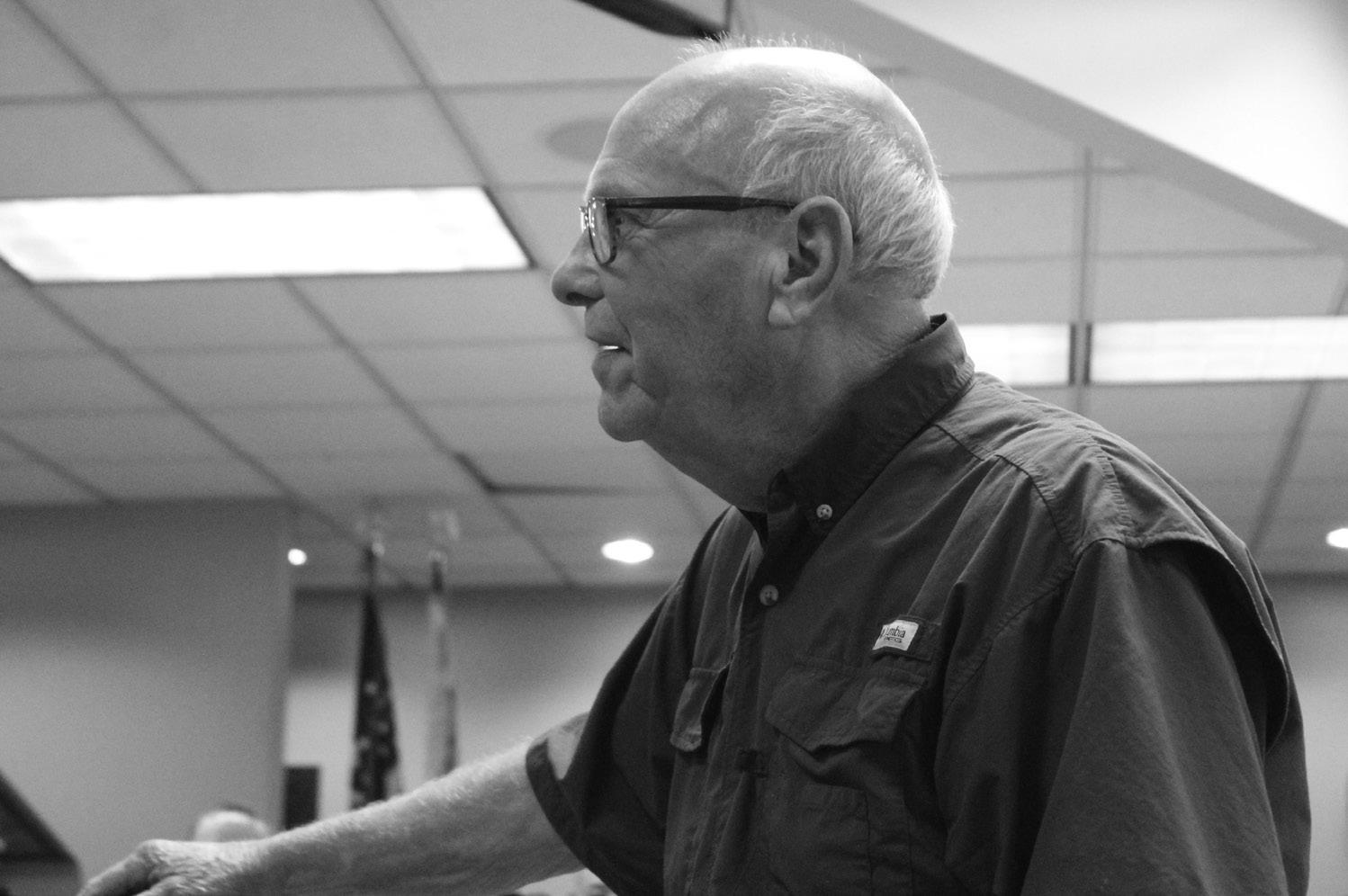
DRY LANDINGS – Jake Kern of Kern’s Landing near Henderson listens to LDWF biologist Brac Salyers answer a question Kern had about using drawdowns at Henderson Lake to control invasive aquatic plants on alternating years rather than every year. The drawdowns leave the landing dry and force him to close his business for at least three months every year, Kern said. (Chris Landry)
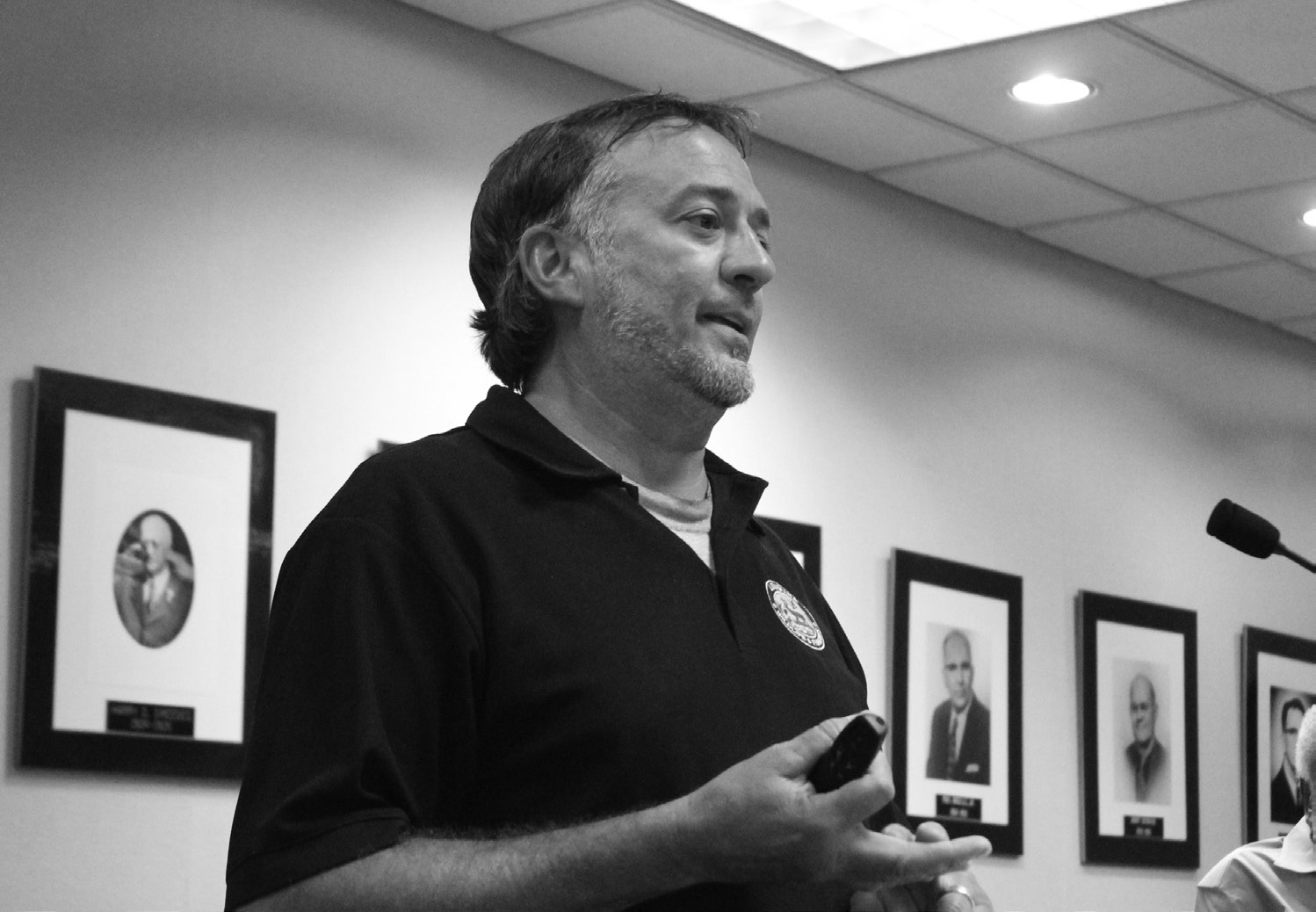
CONTROL EFFORTS – Louisiana Department of Wildlife and Fisheries biologist Brac Salyers talks to the St. Martin Parish Council about LDWF’s recommended drawdown of Henderson Lake that is part of the department’s efforts to control invasive aquatic plants in the lake. (Chris Landry)
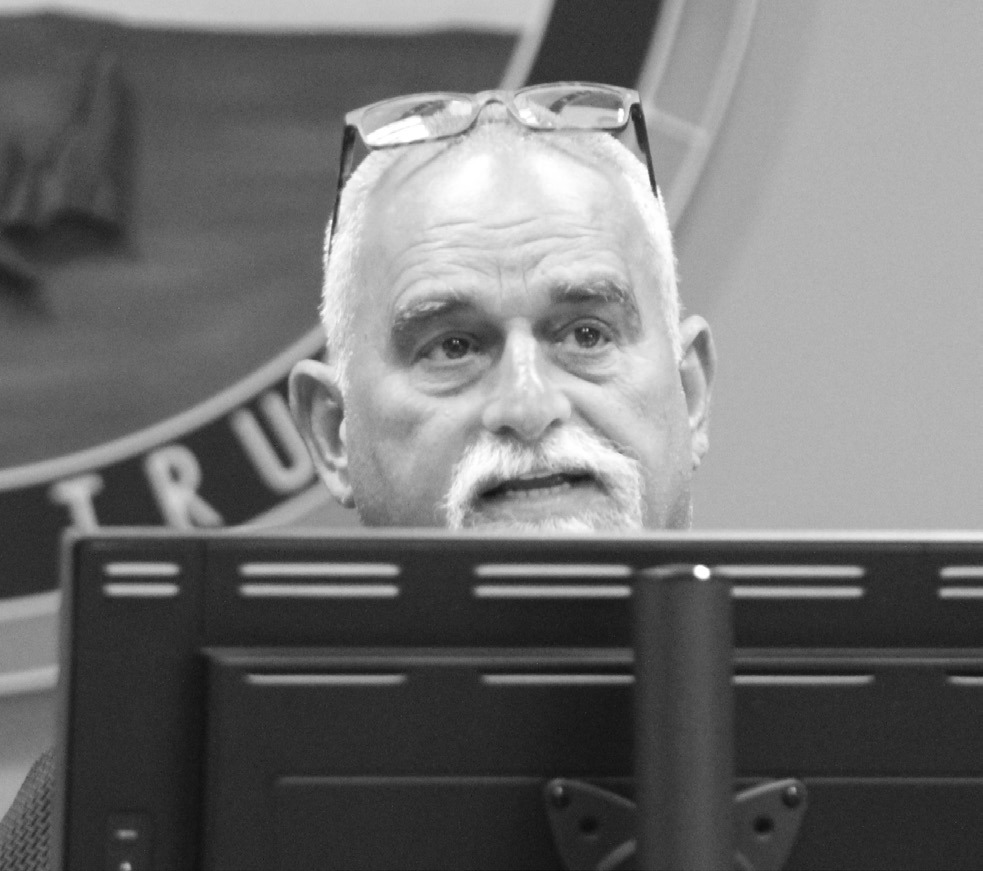
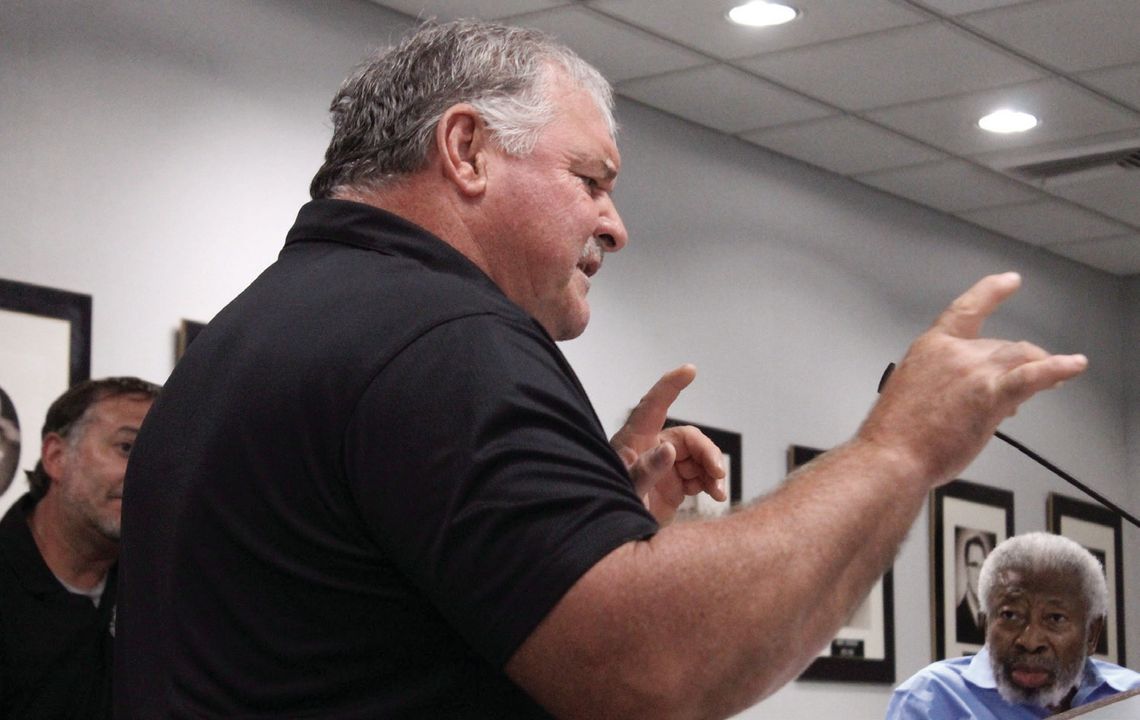
CONTROL STRUCTURE – St. Martin Parish Council Chairman Chris Tauzin talks about the Henderson Lake Control Structure, which is under the charge of the parish government. (Chris Landry)
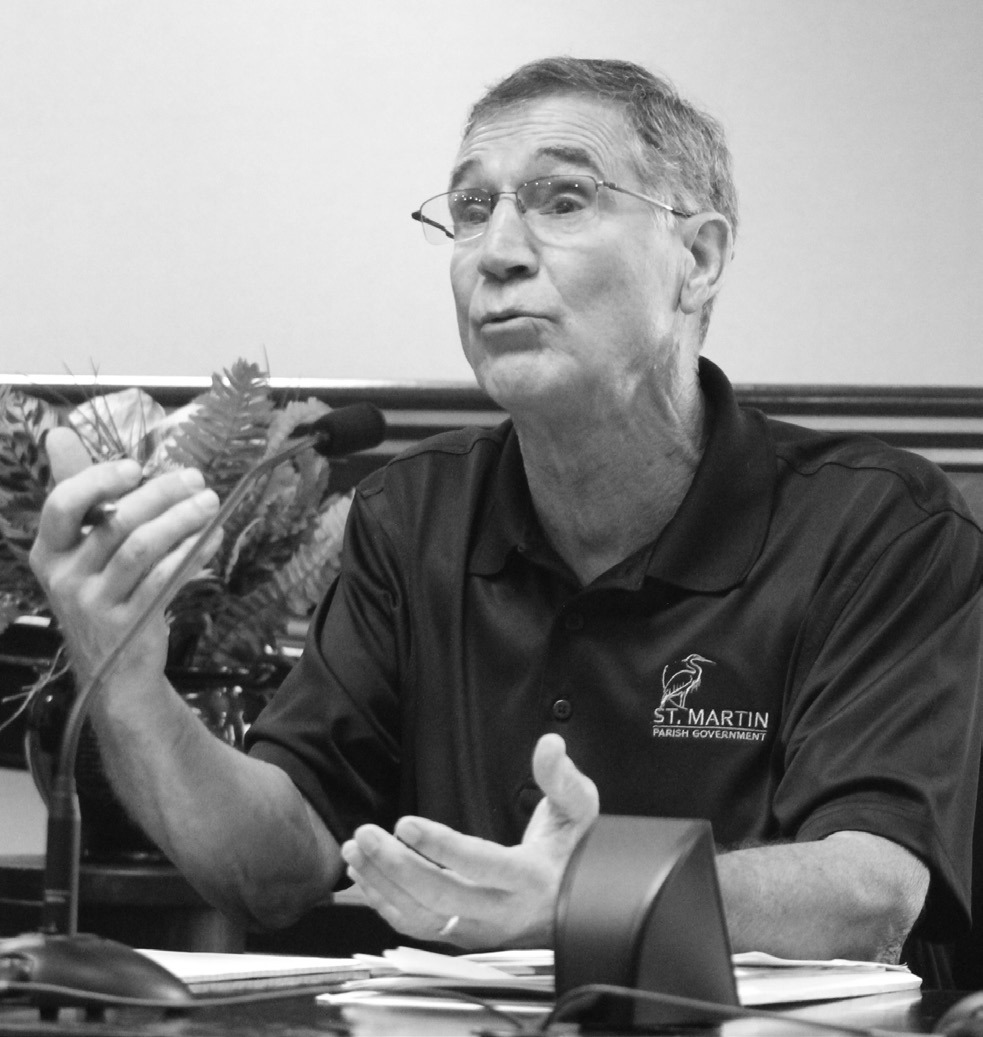
BAYOU CHENE FUNDING – Parish President Pete Delcambre talks with the St. Martin Parish Council at its meeting this past week about an intergovernmental agreement with the St. Mary Levee District to provided $75,000 annually to help fund the maintenance of the Bayou Chene control structure, which can help prevent flooding in Stephensville. (Chris Landry)