Get It Growing
Uttering the word “lice” rarely inspires enthusiasm or positivity. For some people, the mere thought of lice brings back less-thanfond childhood memories of infestations — and itchy scalps — spreading at school.
While head lice are rightfully despised blood-sucking parasites, there’s another kind of lice that is much friendlier. They’re called bark lice, and you might find them in your yard if you have crape myrtles.
Bark lice are small insects that show up in spring and summer. In Louisiana, we usually see bark lice on crape myrtles, but they can live on other trees.
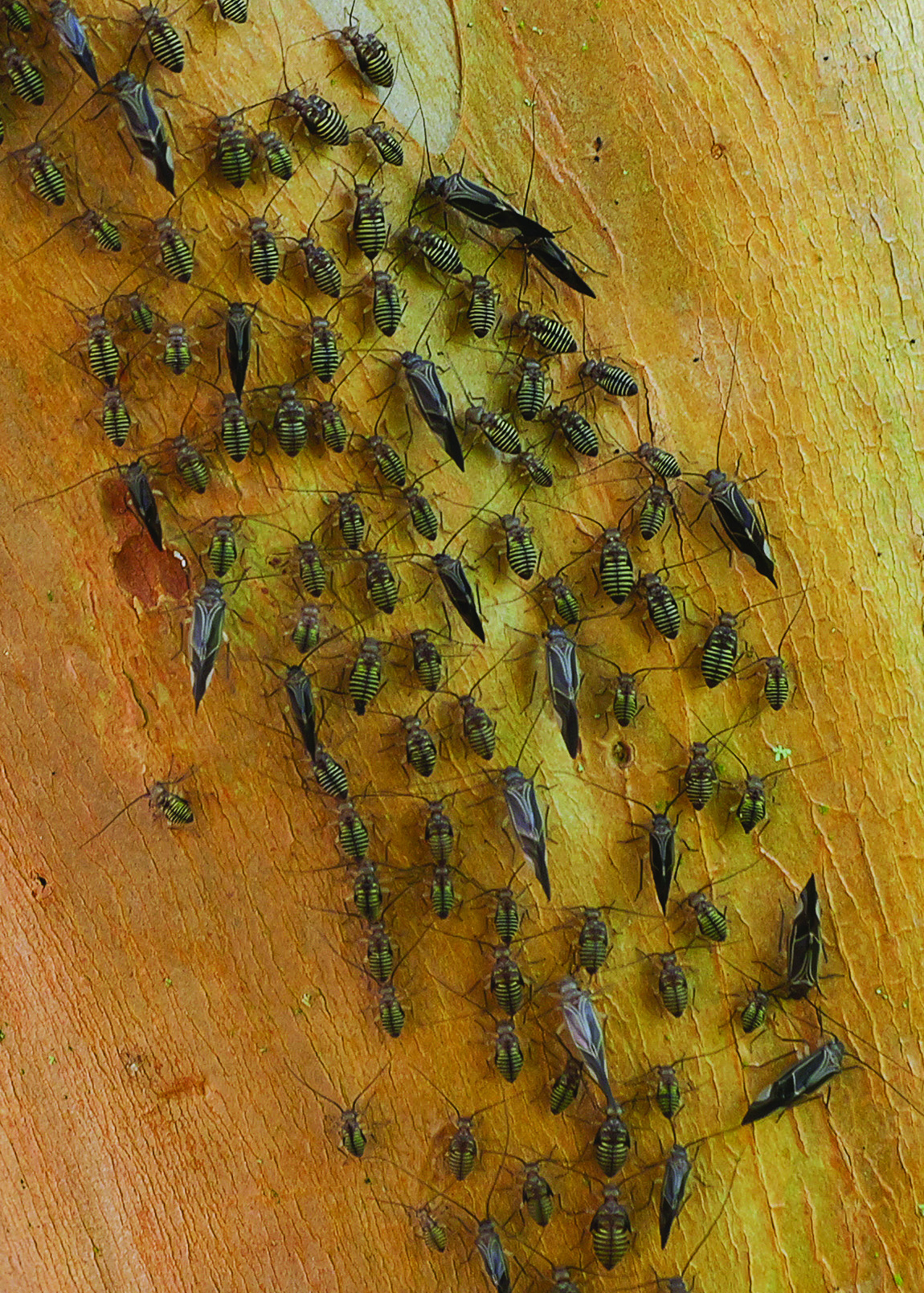
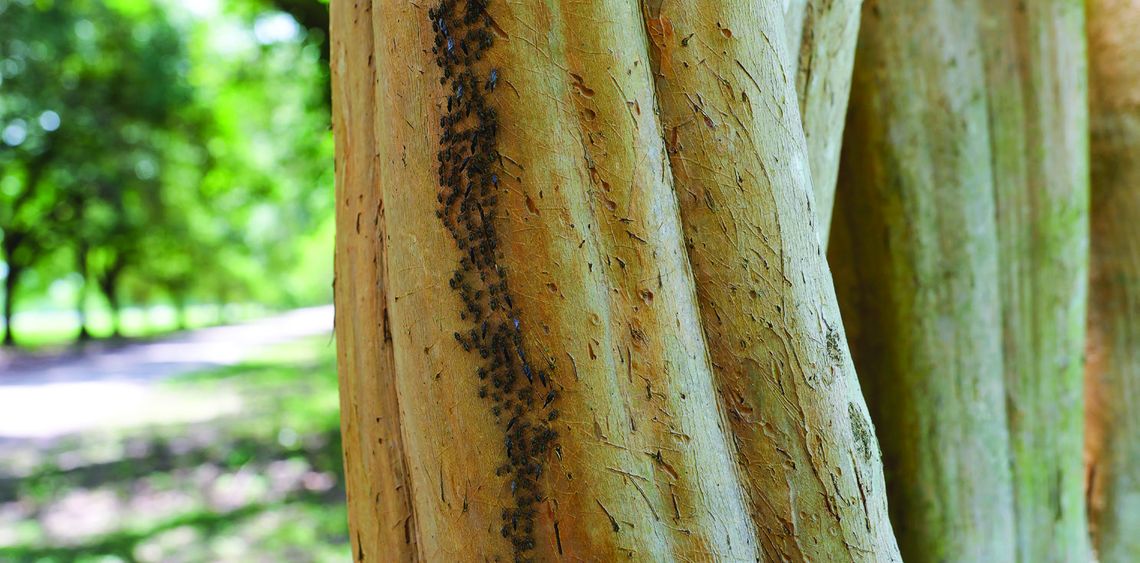
Adult bark lice are long, slim and brown to black. Juveniles have rounder bodies with stripes. The insects like to hang out in groups to ward off predators like birds.
“Even though they may have a scary appearance with that large aggregation, they are in fact not causing any harm to the tree,” said LSU AgCenter entomologist Aaron Ashbrook.
If you spot bark lice on a crape myrtle, rest assured that they are not feeding on the tree itself. Instead, these insects graze on algae, lichens, mold and other organic materials growing on the tree’s surface.
“So, in some ways, they’re even helping the tree,” Ashbrook said.
Bark lice can be a source of entertainment, too. They’re commonly referred to as tree cattle and can be “herded.” Point a finger or stick near a bark lice aggregation, and they’ll move up the tree as a group in unison.
Now, don’t assume every insect you see on a crape myrtle is harmless. It’s important to distinguish beneficial bark lice from insect pests such as aphids, which are tiny, yellowish and often found on the undersides of crape myrtle foliage. You’ll also want to keep an eye out for invasive crape myrtle bark scales, which are stationary, white-to-gray, fuzzy insects.
Aphids and scales both suck sap from crape myrtles — aphids from leaves and scales from bark. They excrete a sticky honeydew, encouraging the growth of sooty mold on trunks and branches.
Bark lice, on the other hand? At most, all they’ll leave behind are the fine, silky webs they sometimes spin as another protective measure. And you can easily wash away the webs with a water hose if you don’t like the way they look.