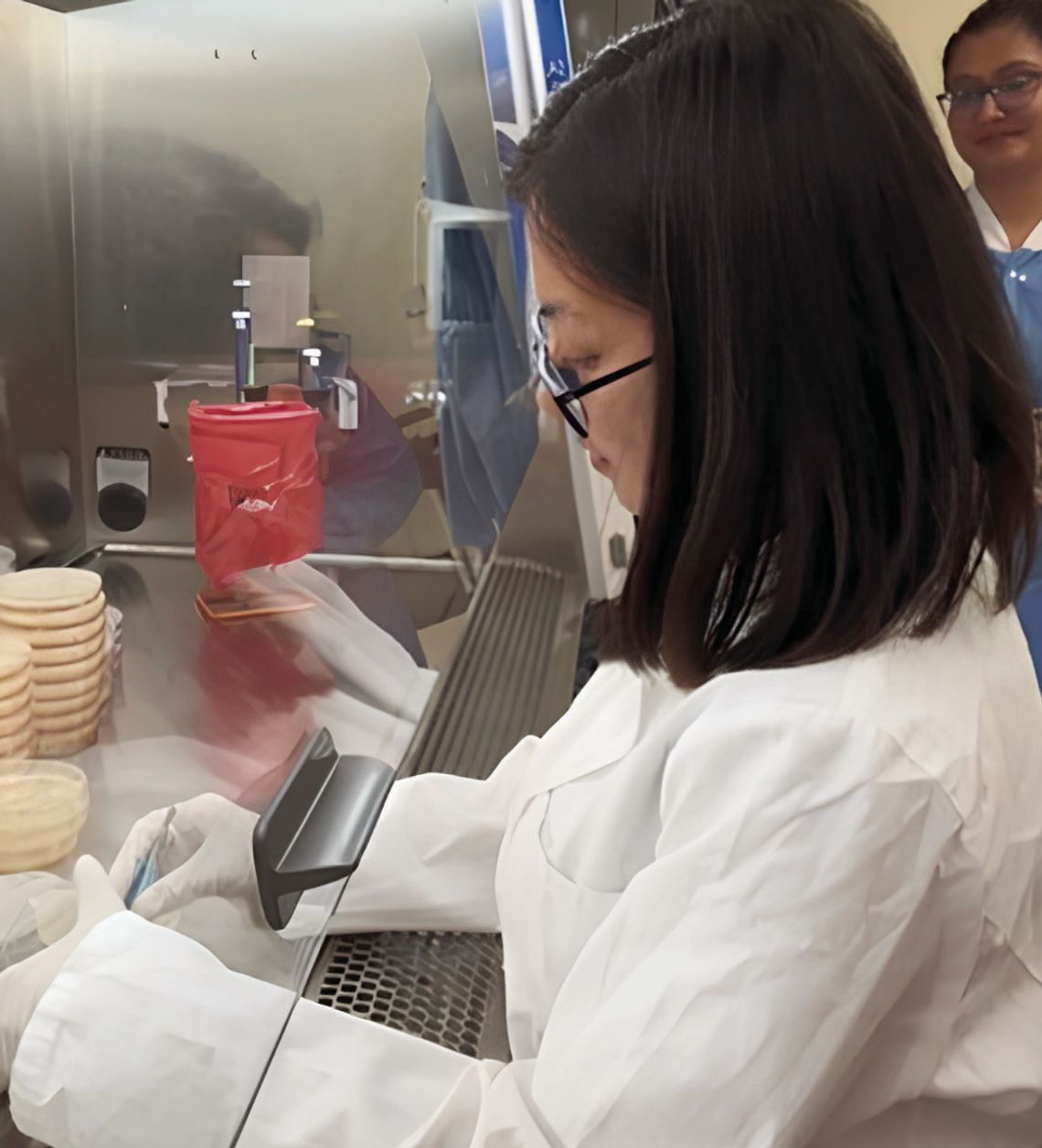
Baton Rouge — In Karuna Kharel’s LSU AgCenter food microbiology lab, pecans are better protected, freeze-dried strawberries are safer and smoked and canned oysters are safely on the menu. The researcher focuses on improving the safety and quality of Louisiana commodities, with particular attention to low-moisture foods like nuts and freeze-dried products.
“Foods such as spices, flour or nuts that have low moisture, we assume they are microbially safe,” said Kharel, an assistant professor of food microbiology in the LSU School of Nutrition. “But there are several studies that have shown that microbes, if they get into those products, they can survive for a long period of time, and so that becomes a food safety concern.”
Kharel is working with graduate students to develop practical and scientifically validated intervention techniques to make these foods safe, increase their shelf life and retain their quality.
Dikshya Shilpakar, a master’s student in food science, is steam-treating pecans still in their shell to see at what temperature the steam will kill potential pathogens on the pecans. Many pecan processors use hot water treatments on their harvested pecans, which can result in a darker pecan kernel that can be unappealing to the consumer.
“We are focusing on the saturated steam treatment which can give them the similar microbial reduction faster, make the pecan safer while maintaining the quality of the pecan kernel,” Shilpakar said.
Shilpakar is testing saturated steam by maintaining different times and temperatures in an in-house-designed insulated chamber to see which options work best. She is also looking at sanitizer washes used on pecans after they are shelled to stop the introduction of pathogens into the pecan kernels.
Keeping pecans safe doesn’t end there. Food science Ph.D. student Pratiksha Shrestha is developing an antibacterial film that can be inserted into pecan packaging and can be applied into any low-moisture food packaging. The film is made from a flexible nanocellulose material that contains oregano oil and nisin, which both have antimicrobial properties.
“The film will slowly release the antibacterial material and antibacterial agent over the time of storage to ensure the safety of the pecans during their storage period,” Shrestha said.
Part of the research is ensuring there is no oregano aroma on the pecans from the film.
Kharel’s lab is also in the preliminary stages of looking at ways to keep freeze-dried strawberries free of contamination.
“If a strawberry, let’s say, is already contaminated from the fields, and we freeze dry them, that’s going to stay there for a long time,” Kharel said. “When we rehydrate them, there’s more moisture so that may be a breeding ground for microbes.”
Kharel also leads projects focused on water safety in agriculture. She received a grant from the Louisiana Board of Regents to examine how combining UV‑C treatment with sanitizers can more effectively reduce microbial contamination in irrigation and the wash water for produce, while minimizing negative effects on soil, plants and the environment.
Through funding from the Louisiana Sea Grant, she is expanding her work into seafood safety, particularly validating smoking and canning processes for oysters to prevent Clostridium botulinum growth under low‑oxygen conditions. This research is paired with sensory and consumer studies.
“Our idea is to validate that canning process and smoking process through our research and then partner with extension faculty to disseminate that information out to fishermen and Louisiana seafood processors,” Kharel said.