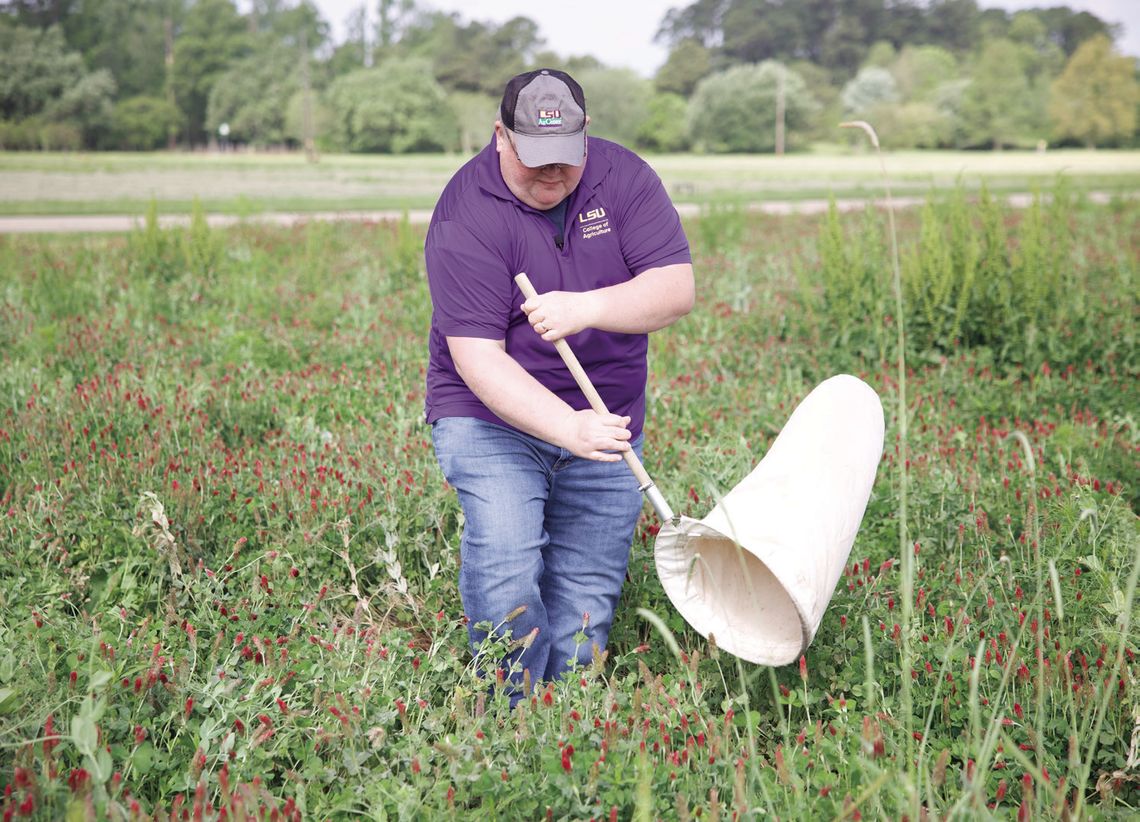
Cover crops are an important off-season tool for farmers looking to improve soil fertility, reduce erosion and manage nitrogen, all while creating an ecosystem for pollinators and other beneficial insects to thrive.
However, they can also be a “green bridge” for undesirable pests like the redbanded stinkbug.
LSU AgCenter entomologist Jeff Davis extolled the benefits of cover crops, such as the leguminous crimson clover present in fields behind the Burden Museum & Gardens in Baton Rouge.
“In general, these crops do provide a good cover,” Davis said. “They can suppress weeds and provide refuges for birds and beneficial insects like lady beetles.”
According to Davis, the popular crimson clover crop also attracts pests like stink bugs, especially the redbanded variety, which can cause pod damage in soybean plants and severely damaging seeds.
“We’ve seen populations 20 times greater in cover crops like a crimson clover than we do in soybean,” he said. “However, crimson clover is still a great cover crop in that it selfseeds. You’re going to see it year after year.”
He said that, while providing excellent erosion control, crimson clover also creates a green bridge to main crops for the pests to infiltrate when looking for alternate crops in which to survive.
“So, the redbanded stink bugs are going to be in there, going to be feeding there, going to be multiplying and then going to be leaving,” he said. “When that green bridge is burned down if you have a crop near already, like soybeans maybe planted in late March or early April, if you’re burning it down at this point, those stink bugs are going to move into your crop.”
Because of this, Davis cautions about proper maintenance, saying that farmers should always burn down, or terminate, cover crops a minimum of four weeks before planting to ensure they have had a chance to start turning into mulch, thus curtailing the encroachment of harmful insects into main crops once planted.
Davis said recent AgCenter research shows that while cover crops can be a breeding ground for harmful insects, they also provide a habitat for beneficial ones.
“The majority of what we’ve seen move from these cover crops into adjacent fields are spiders, which are natural enemies that are going to eat the unwanted pests,” he said.
Davis reemphasized that, overall, cover crops provide important ecosystem services to farmers by reducing erosion while capturing nutrients and to natural enemies by providing areas to thrive, but they also provide dwellings for pests to occupy while waiting for their next food source to grow.