V. Todd Miller LSU AgCenter
Baton Rouge — It doesn’t have an odor, it doesn’t cause respiratory issues and it has nothing to do with greenhouse gases. But light pollution is real, and its effect on insect populations has LSU Ag-Center researchers looking for common-sense solutions.
Light pollution is the brightening of the night sky with artificial light beyond what is essential for safety and navigation. In addition to factors such as habitat loss and overuse of pesticides, the issue is emerging as a major contributor to the decline of insects in many parts of the world. It also affects bird migration patterns and impacts human health by disrupting normal circadian rhythms essential to healthy sleep patterns, among other detrimental outcomes.
AgCenter entomologists Aaron Ashbrook, Stephen Baca and Christine Gambino along with lead researcher and entomology emeritus professor Chris E. Carlton are working on simple, incremental solutions to deal with the adverse effects of light pollution.
“Many people have happy memories of catching fireflies as children, and firefly tourism has risen dramatically in areas where healthy populations remain,” Carlton said. “Unfortunately, firefly populations have suffered severe population declines in many areas of Louisiana and elsewhere.”
According to Carlton, most species of fireflies possess organs that produce light due to a chemical reaction involving an energy rich molecule, luciferin, and an enzyme, luciferase. This reaction produces distinctive greenish or bluish flashes or sustained glows of fireflies.
Ashbrook added that, despite the bright flashes against a dark landscape that are familiar to most people, the light produced by fireflies is relatively dim, and artificial lights such as porch and streetlights render communication among individual fireflies impossible.
Thus, in light-polluted environments, no mating occurs, and the population can disappear in a single generation. According to the researchers, reestablishing adult and larval habitats are necessary steps for firefly recovery, but in areas of excessive lighting, fireflies are unlikely to return and thrive.
“Establishing firefly sanctuaries in local parks and other green spaces can improve habitat for many nocturnal animals in addition to fireflies,” Gambino said. “Many organisms benefit from dark wildlife corridors in addition to having access to their preferred habitats.”
In addition to firefly populations, light pollution also creates problems for homeowners and businesses by attracting large numbers of insects that are normally dispersed across the landscape.
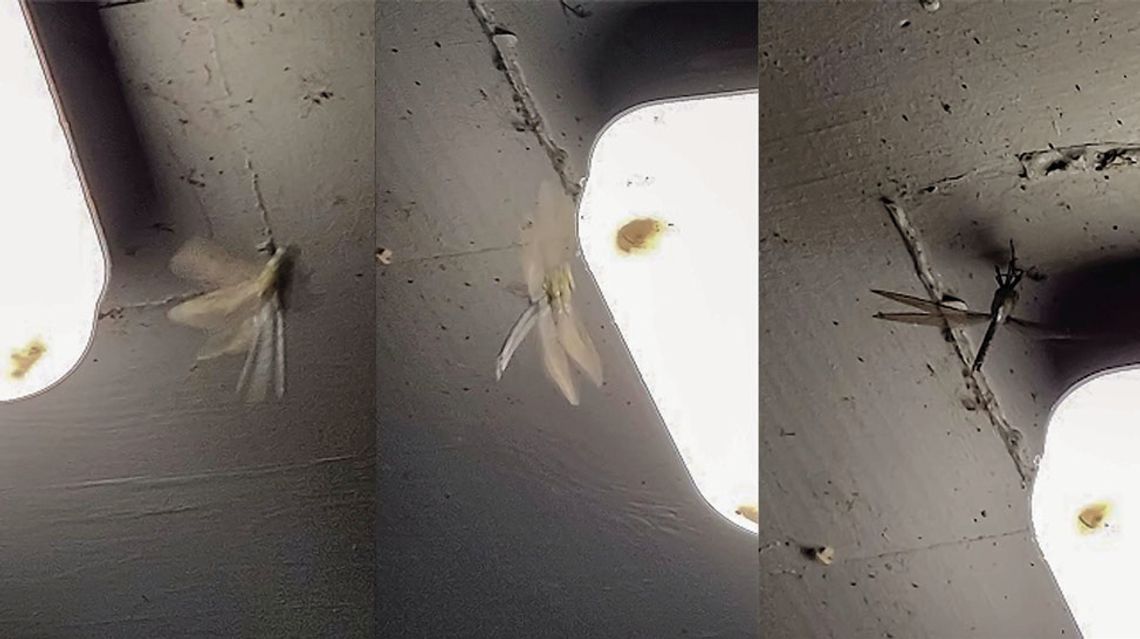
Many residents of Louisiana can attest to the annual clouds of Formosan subterranean termites (Coptotermes formosanus) that fly around streetlights, typically around Mother’s Day, which coincides with the peak mating swarms of the year for the species.
“These flights normally originate in areas where woody debris accumulates such as wooded corridors along bayous, nearby forests, infested trees and discarded lumber,” Carlton said. “In these areas, termite mating flights pose little threat to homes or other wood frame structures and serve as a valuable food source for insect-eating wildlife such as birds and frogs.”
Ashbrook said that streetlights attract the termites into neighborhoods, where porch lights and illuminated windows subsequently attract them to homes. Inevitably, a few find their way into homes, where they are a nuisance and, if moisture issues and other suitable conditions for termite establishment are present, they may potentially create colonies and cause major property damage.
The researchers say that turning off lights at night can help supplement professional preventative termite management and home moisture maintenance to help protect structures from Formosan subterranean termite damage.
This and other small, incremental steps can reduce light pollution, substantially improve habitats and reduce light trespass that impacts nearby residents.
“Local neighborhood initiatives increase public awareness and promote efforts to convert local security lighting to less polluting but equally effective types of fixtures,” Carlton said. “Bright, high, mounted fixtures such as streetlights mounted on telephone poles should be eliminated and replaced with lower, downward directed fixtures using longer wavelength light sources that are orange or red in color.”
Other potential solutions include: Individual residential security lights could be replaced with motion sensitive lights calibrated for large animals or intruders.
Shutters are available that can diffuse light so that it is less harmful to wildlife but still provides visibility to residents.
Warm-spectrum lights are preferred, with red being the least harmful.
Indoor lighting should be turned off at night, or the windows can be shuttered if light shines outdoors.
For a more detailed version of this article as well as additional links about light pollution and ecosystem health, visit https://bit.ly/ artificial-light-impact.
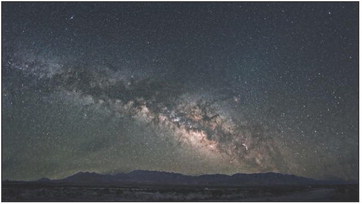
Time exposure photo of the Milky Way over the Peloncillo Mountains in southern New Mexico. Such images are possible only under dark, unpolluted skies. (Chris Carlton/LSU AgCenter)