Breaux Bridge – The St. Martin Parish School Board received a clean audit for the past fiscal year from its auditing certified public accountants.
“It is what’s known as an unmodified, or in layman’s terms, a clean audit report,” Russell Champagne of Champagne & Co. told the board. “So that’s what you’re hoping to get from us, and that’s what you did get from us. Good job.”
Champagne showed the board the school district’s statement of net position — all of the assets and liabilities, including health insurance for retirees and unfunded pension obligations — as of June 30, 2025.
Total assets for 2025 were $198 million, compared to $205 in 2024. Deferred outflows of resources — pensions and health insurance for retirees — was at $44 million compared to $36 million in 2024.
Total liabilities were at $280 million compared to $299 million the previous year.
Total net position improved from negative $70 million in 2024 to negative $63 million in 2025.
The negative numbers are a result of an accounting standards that now include the deferred obligations (mainly unfunded pensions and retiree health benefits), Champagne said.
“That’s when these huge negative numbers came about,” he said. “You’ve made really good progress since that time. But it was big numbers that had to be implemented at one time.”
The statement of activities — all revenues and expenditures for the fiscal year — showed a change in net position improving from a positive $1.2 million the previous year to positive $6.6 million this year.
“So, a lot of improvement for you there,” Champagne said.
The general fund assets went from $43 million in 2024 to $42 million in 2025. Liabilities went from $12 million to $14 million. Fund balance went from $31.2 million to $28 million.
The board remains in good financial condition in case of emergencies with 4.3 months of expenditures of fund balance in the general fund.
“This is something we’ve been tracking for a very long time for you because you’d gotten your fund balance down to a very low level years and years ago,” Champagne said. “We feel like the minimum balance you should have is three to four months, so you’re right on target and actually a little bit ahead of target as to where we feel you need to be.”
Audit
Revenues went from $64 million in 2024 to $63 million in 2025, and expenditures went from $78 million to $77.9 million, remaining similar.
The summary of auditor’s results indicated no internal control or compliance issues regarding financial statements.
However, there were internal control weaknesses dealing with major programs (federally funded programs). Four of the five findings (things that must be reported) were dealing with those federal programs. The fifth was regarding a theft from the school system years ago that is now being repaid through garnishment of wages.
The issues with the federal funds ranged from small amounts to bigger amounts of funds not being spent properly.
“Our recommendation is the controls need to be implemented if they exist, and those that do exist need to be studied and improved,” he said.
That’s the whole point of audits, he said, to find areas that need to be dealt with and recommendations for how to improve those areas.
Board member Richard Potier asked about two areas not covered in the audit report. Potier said each board member should get copies of all checks that are returned after it’s been processed by the bank, so they can review whether those checks were cashed and didn’t exceed the correct amount.
Champagne said he was unfamiliar with that requirement, which Potier said was a legislative requirement passed at least 20 years ago.
The second matter was that the audit report didn’t show that the board had been holding maintenance committee meetings the required two times a year. Board member Russel Foti said the board is only required to hold maintenance committee meetings once a year.
Potier said the auditors should go through the committee meetings minutes for the audit.
“I think you’ll see the maintenance committee minutes as part of your board minutes,” Champagne said.
Block scheduling
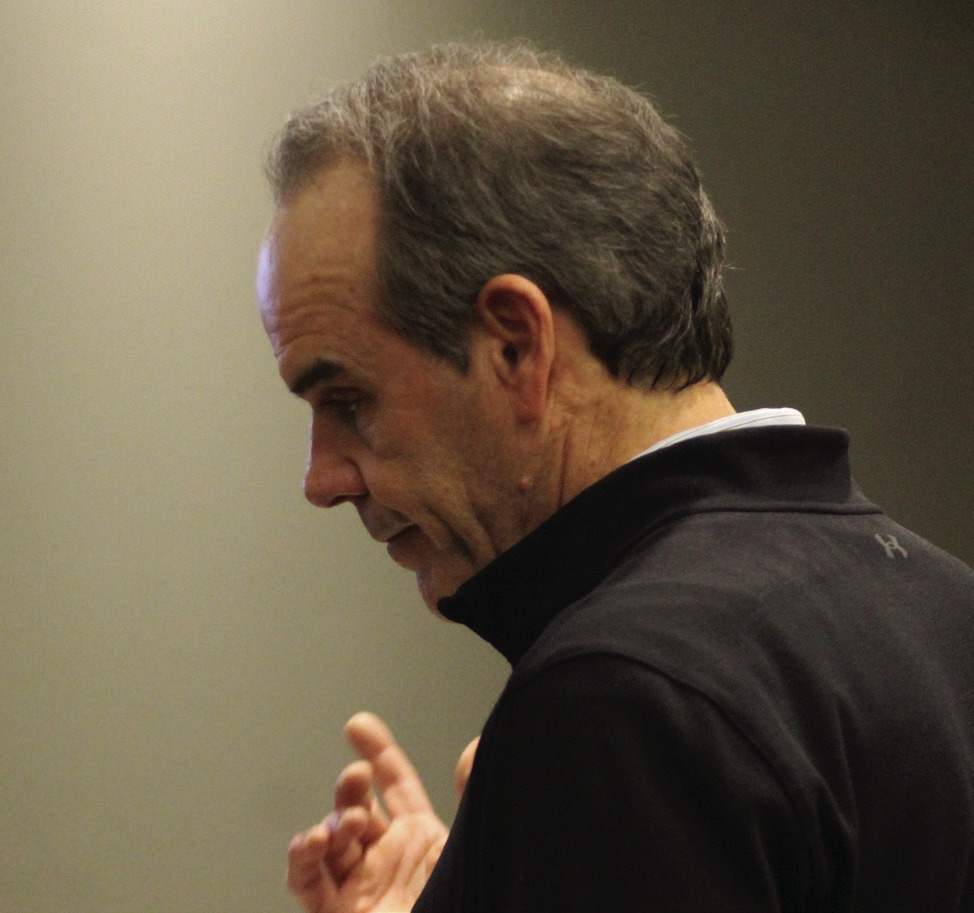
The board considered changing to block scheduling for the three high schools in the parish, as explained by Kevin Dugas, Supervisor of Technology and Virtual Learning.
Dugas said the board had considered the change the previous school year but felt it was too late in the schedule to make that change.
“It’s still something we feel overall will benefit the high schools, especially, as you’ll see, the state has changed the accountability model now so high schools are going to be graded more specifically on assessments,” Dugas said.
A poll of employees found that the faculties are strongly in favor of changing back to block scheduling, he said. Eighty percent of Cecilia and Breaux Bridge teachers voted in favor of the change and 76 percent of St. Martinville Senior High teachers were in favor of it.
The change would also allow students to earn 32 credits by graduation instead of the 28 credits they can earn now.
Cecilia High Principal Nicole Usie said that in block scheduling, teachers have more time in each period to interact with students individually. During the current scheduling format, teachers have only 52 minutes per period with a 30-minute separate period to work with students individually. But up to 28 students could need help during that 30 minute period. The longer periods during block scheduling give teachers more time to provide individual instruction, she said.
Dugas also said that in the past, two additional teachers were provided for each high school during block scheduling years, and the school district would like to see that again, allowing the schools to meet the scheduling demands that block scheduling provides.
Casey Broussard, the school system’s Chief Financial Officer, said that would cost at least $350,000 a year.
The school system switched away from block scheduling for the 2021-22 school year. The staff said the decision to return to block scheduling needed to be made as quickly as possible because the staff has typically started working on scheduling by January.
After considering waiting until after the education committee meeting scheduled for Feb. 11 to make a decision, the board voted to move the high schools to block scheduling beginning next school year.
Support personnel
The board honored the district’s Support Personnel of the Year, with Superintendent Frederick Wiltz presenting a plaque to each school’s honoree and the three regional honorees.
School honorees were Shawnette O’Neil of Breaux Bridge Primary, Leslie Wiltz of Breaux Bridge Elementary,
(Chris
Latricia Lardge of Breaux Bridge Junior High, Megan Seneca of Breaux Bridge High, Henry Mizett of Teche Elementary, Colette Taylor of Cecilia High School, Nikki Morvant of Parks Primary, Tracy Simon of Parks Middle, Dessia Handy of St. Martin Early STEAM Academy, Tasha Schexnayder of St. Martin STEAM Academy, Christine Neveu of St. Martinville Junior High, Tina Menard of the College & Career Readiness Center and Thomasina Rink of Stephensville Elementary.
District winners were Megan Huval of Cecilia Primary, Rachel Sylvester of Cecilia Junior High and Nana Doer of St. Martinville Senior High.