Get it growing
Editor’s note: This is the first in a three-part “What’s on my tree?” series about organisms that are commonly found growing on trees in Louisiana. Here in Louisiana, we’re all familiar with Spanish moss — those charming, lacy veils that cascade from our beloved live oak and bald cypress trees and blow gently in the wind.
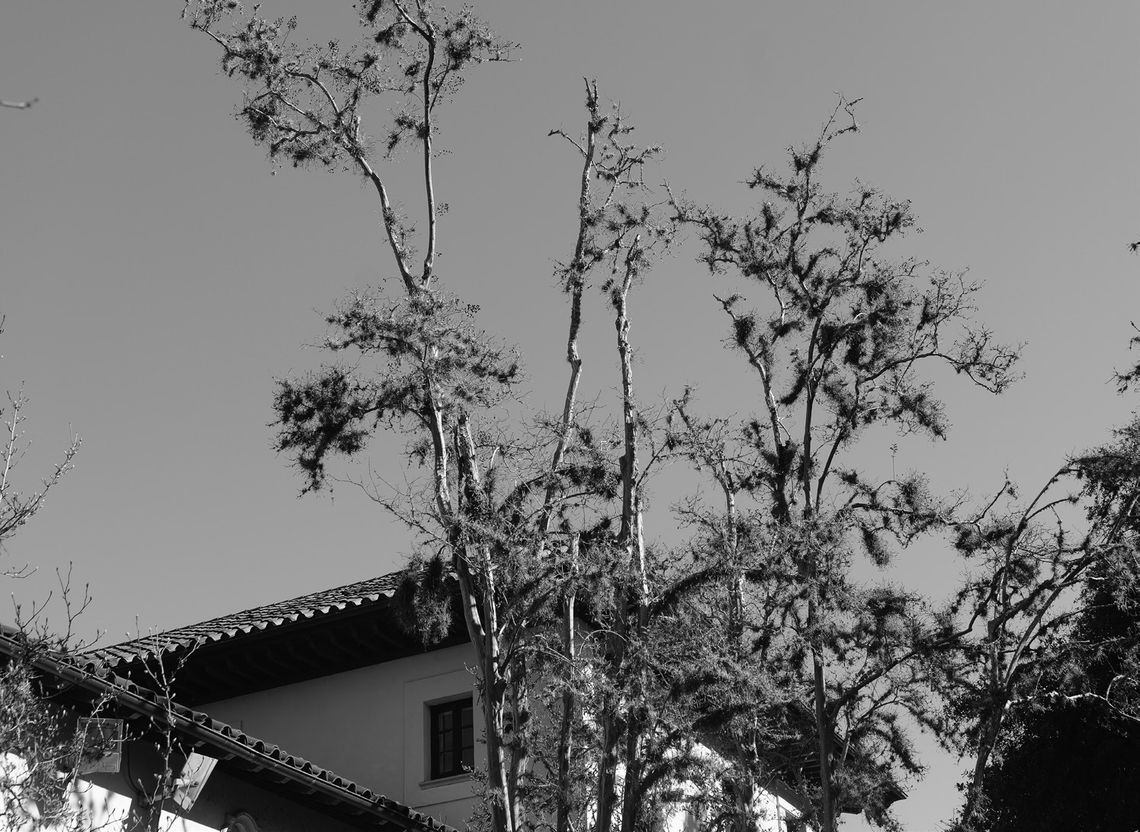
In recent years, however, you’ve likely noticed another, less elegant type of moss creeping into trees around the state. It’s called ball moss and, as its name suggests, it grows in a compact, spherical form affixed to tree bark.
Put plainly, ball moss isn’t pretty. While Spanish moss can look like a sophisticated adornment, greenish-gray clumps of ball moss are quite the opposite, often giving the impression that something is wrong with the tree they are clinging to.
Although unsightly, ball moss itself isn’t directly harmful to trees — and, contrary to popular belief, it’s not a parasite. Just like Spanish moss (Tillandsia usneoides), ball moss (Tillandsia recurvata) is an epiphyte, meaning it gets nutrients and water from the air, not its hosts. (As an interesting aside, both species are related to bromeliads as part of the Bromeliaceae family.)
Ball moss
What can cause problems is heavy infestations. Excessive ball moss growth can weigh down and snap smaller branches. It can even restrict fluid exchange and airflow in trees, affecting their health.
Ball moss attaches itself to hosts using holdfasts, which are root-like projections that allow it to latch onto just about any surface. It prefers deciduous trees with rough bark but won’t hesitate to colonize other types of trees and shrubs. (It loves crape myrtles even though they have smooth bark!) Ball moss also can grow on utility poles and cables, traffic lights, building walls and fences.
Ball moss thrives in humid environments and can be found from Georgia to Arizona and Mexico. It spreads by seeds that are released and dispersed by wind in late winter and early spring.
If ball moss has taken over trees or structures around your home, winter — before those seed capsules split open — is a good time to take action.
The best way to get rid of ball moss is picking off the growths by hand and throwing them away. They’ll be easier to see right now on deciduous trees while there are no leaves in the way.
Unfortunately, manual removal isn’t practical for large trees or severe infestations. In these situations, try a copper-containing fungicide labeled for ball moss control or a baking soda solution. Spraying in winter while trees are bare will ensure better contact with the moss and avoid the possibility of leaf burn.
For more information on ball moss and control strategies, check out the LSU AgCenter’s new fact sheet at www. LSUAgCenter.com/ballmoss.