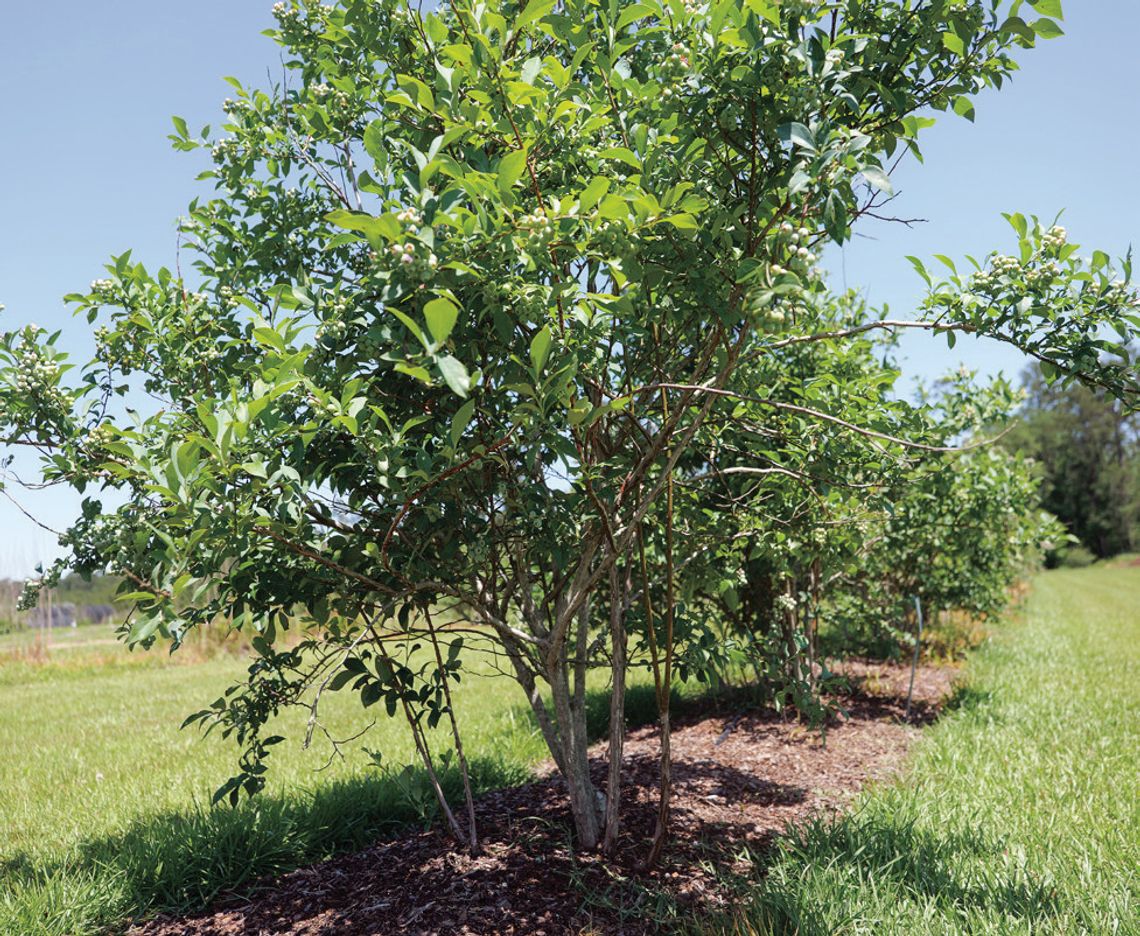
In Louisiana, fall through early spring is the perfect time to plant a host of trees and shrubs — including blueberries.
While these plants won’t bear their delicious fruit for a few more months, it’s best to get them in the ground (or containers!) while the weather is cool. This gives them plenty of time to establish before the arrival of stressful summer heat.
Blueberries are among the easiest fruit crops home gardeners can grow. But there are a few things you should know before you purchase and plant the shrubs.
Mary Helen Ferguson, an LSU AgCenter horticulture agent, offers these tips for blueberry success.
Choose plants carefully Most people in Louisiana grow one of two kinds of blueberries: rabbiteye or southern highbush.
Ferguson generally recommends rabbiteye blueberries, which ripen between May and July. They are more disease resistant and more forgiving when it comes to soil requirements.
“Rabbiteye varieties are well suited for most places in Louisiana,” Ferguson said. “Along the coast and in the New Orleans area might be a bit of an exception.”
In those areas, southern highbush varieties — some of which require fewer chilling hours than rabbiteyes and ripen earlier — may be a better choice.
Regardless of which type of blueberry you decide to grow, be sure to purchase more than one plant. Cross pollination between different varieties is important for fruit production. Try to get two to three varieties, which helps improve yields and quality.
Ferguson has had the highest yields with Tifblue, Brightwell, Ochlockonee, Premier and Austin — all rabbiteye varieties — in a demonstration at the AgCenter Hammond Research Station.
Site selection and soil preparation “When we plant rabbiteye blueberries, site selection and soil preparation are important,” Ferguson said. “We want to choose a location that has full sun, ideally, and is well drained and has relatively acidic soil.”
Blueberries prefer a pH between about 4.5 and 5.2 (up to 5.5 is OK for rabbiteye plants). Much of Louisiana has soils that naturally fall within this range, but in some areas, the pH will need to be adjusted. Typical potting mixes also are not acidic enough for blueberries’ liking.
So, how do you make soil more acidic? When the pH only needs to be reduced a little bit, an easy way is to incorporate a 2-to-4-inch layer of aged pine bark into the ground before planting. This helps improve drainage, too.
Where pH needs to come down more, elemental sulfur can be applied based on soil test results.
“If you’re planting in a container, use aged pine bark or a combination of this and other materials instead of using a standard potting mix since these usually have lime,” Ferguson said.
Giving the plants enough room to grow is crucial. When planting in the ground, space rabbiteye blueberries 5 to 6 feet apart. Southern highbush plants can be spaced 4 feet apart. Select adequately sized pots for container-grown blueberries.
Finally, mulch around the plants with more pine bark to maintain moisture and reduce competition with weeds for nutrients and water.
“Blueberries are shallow rooted, so weed management is important,” Ferguson said.
What next? After you’ve planted your blueberries, keep them well watered — but not soggy. Consider installing a drip irrigation system if you’re planting a large number of bushes in fast-draining, sandy soil.
Newly planted blueberries are susceptible to overfertilization. Wait until leaves are fully expanded in the spring before making a light fertilizer application using something like 1 tablespoon of 13-13-13 or 2 tablespoons of cottonseed meal, Ferguson said. Spread fertilizer in a circle, keeping it several inches away from the base of the plant.
Up to three more fertilizer applications can be made, at least four to six weeks apart, during spring and summer.
Alternative fertilizers include 1/2 tablespoon of 33-0-0 or 2 teaspoons of ammonium sulfate.
Plants in pots likely will need fertilizer that contains secondary and micronutrients as well, Ferguson said.