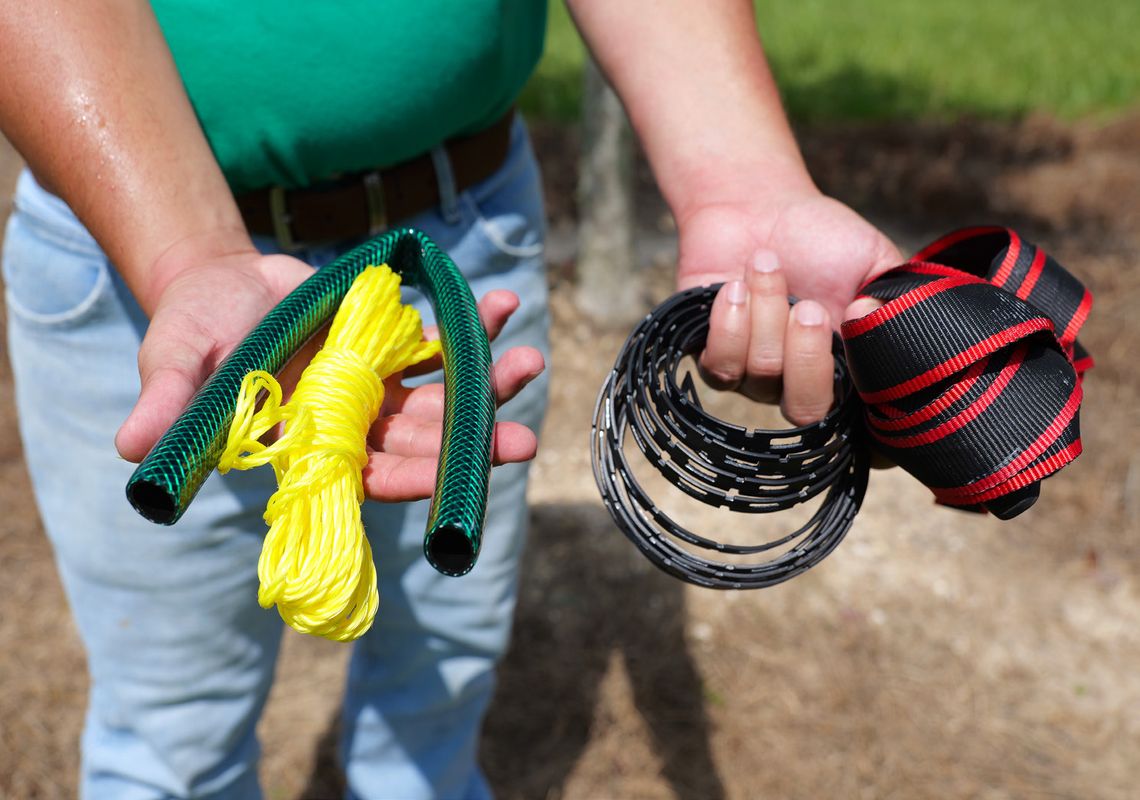
material is used, if it is too tight on the trunk, it could cause problems,” Abdi said.
When tying off to the stakes, pull the material just taut enough to keep the tree upright. The tree should still be able to move around a little.
Step 3: Remove stakes One of the most common mistakes people make is leaving trees staked too long.
“If you leave those straps and those stakes on too long, they’re going to become one with the tree and cause some issues,” Abdi said.
Besides damaging the bark on the trunk, an excessively long staking period can make a tree weaker and more prone to breaking or blowing over in storms. This may sound counterintuitive, but think about it: If a developing tree isn’t allowed to sway in the wind, it will never “learn” that it needs to grow more roots and a thick, sturdy trunk to support itself.
Abdi advises removing staking materials after about one season of growth. That is typically enough time for a tree to get established and safely stand on its own. Stagg said.