(Cecelia
Tobie Blanchard LSU AgCenter
Baton Rouge — LSU AgCenter scientists are seeing promising results in their ongoing efforts to restore roseau cane stands in coastal Louisiana, a critical step in protecting the state’s fragile wetlands.
The research team, led by AgCenter entomologist Rodrigo Diaz, recently visited Pass-a-Loutre Wildlife Management Area at the mouth of the Mississippi River to monitor restoration trials planted since 2022. This region, characterized by expansive mudflats, presents unique challenges for establishing roseau cane, a plant vital for stabilizing riverbanks and reducing erosion.
“Thanks to a dedicated team, we’ve been planting roseau cane every year in plots of varying sizes,” said Diaz. “It’s not an easy task, given the logistics of transporting crews to remote locations and working in deep mud.”
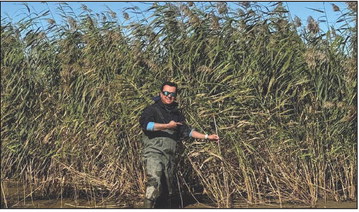
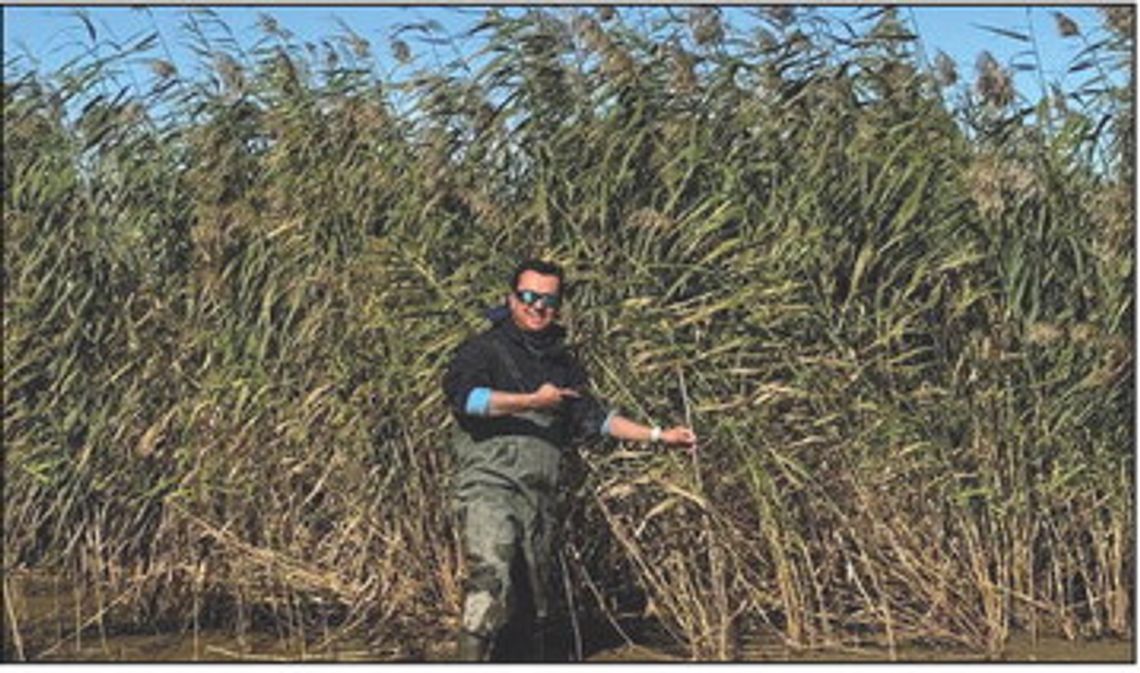
During the December visit, researchers observed strong establishment in most plots and noted that trials planted in spring 2025 are thriving. To measure growth, the team deployed a drone equipped with a lidar sensor to estimate plant height and biomass — key indicators of restoration success.
“All of this started from cut stems just a few months ago,” Diaz said. “Seeing these stands take hold is an early Christmas gift for our team.”
Roseau cane (Phragmites australis) plays a vital role in Louisiana’s coastal ecosystem, helping to anchor soil and reduce erosion along the Mississippi River Delta. However, in recent years, roseau cane dieback has threatened these benefits, prompting AgCenter researchers to investigate causes and develop restoration strategies.
The dieback phenomenon, first observed in 2016, has been linked to an invasive scale insect and other stressors. Without healthy stands of roseau cane, Louisiana’s wetlands become more vulnerable to erosion and storm surge, accelerating land loss in a region already facing severe coastal challenges.
Diaz is part of a multidisciplinary team of researchers that has received more than $8 million since 2018 for research projects focused on understanding dieback and developing management tools for roseau cane.
The AgCenter’s restoration trials aim to identify effective planting techniques and management practices to reestablish roseau cane in affected areas. Researchers plan to set new plots in spring 2026 and continue monitoring growth and resilience.