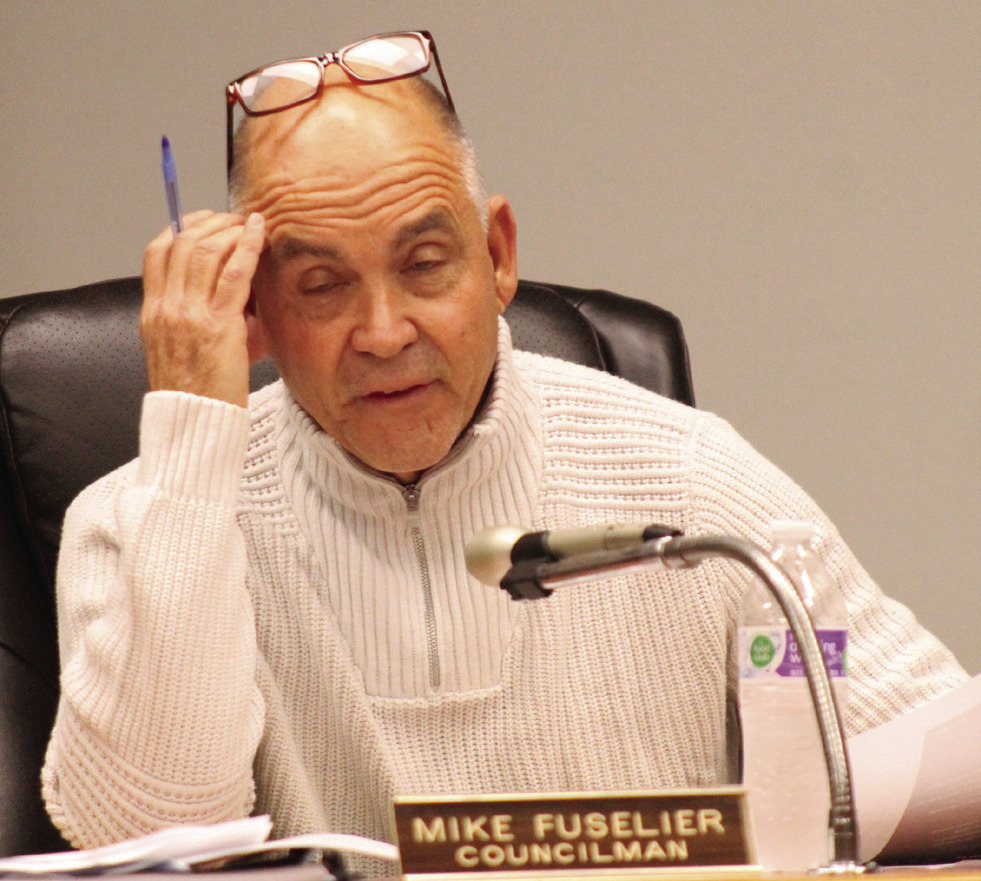
Fuselier clarifies comments about emergency response
– The audit of the St. Martinville city government by CPA Burton Kolder for the fiscal year ending in June saw the internal control and compliance findings reduced from 12 for the previous year to five for the recently completed fiscal year.
Findings describe weaknesses in internal controls or instances of noncompliance, which an auditor must report under certain circumstances to inform governance and regulatory bodies for timely corrective action.
“We had three compliance findings last year and had no compliance findings this year,” Kolder said.
The findings were all carryovers from last year that the city administration is working to fix, with some already resolved, Kolder said. Some of those findings were things like reconciling bills to money collected for utility services at the end of each month, attempting to improve the accuracy of reports each month.
“I’m confident that we’re going to be down after this year if it continues,” Kolder said.
“We’re gradually getting better. Last year we had a total of 26 comments, including the small report comments. We had 12 in here (the report that will be sent to the state’s auditors). We’re down to seven in here. So, I’m very pleased that you went from 26 total findings, we’re down to 14 total findings, including the seven that’s in here.”
Some of the things recommended for better reconciliation of accounts at the end of the month have been implemented already, Kolder said.
Some issues can’t be corrected, such as segregation of duties for different city employees, because the small size of the city staff means some duties that would be shared by different people in a larger staff are needed to be done by one person.
Audit
“We’re moving in the right direction, I believe,” Kolder said. “Of the five, there’s three that you can correct.”
The city has also begun making corrections such as updating its software for utilities.
Revenues for the utilities in the city rose by $236,000, Kolder told the council.
Expenses increased some with salaries rising slightly and retirement payouts also going up slightly. Payroll taxes remained consistent, though group insurance rose.
One of the main increases was in insurance, up from $95,000 to $225,000.
Power purchase costs went up as well. Overall numbers were very close for expenses to the previous year.
Inaccurate billing corrections have led to a reduction in collections but the correction was necessary, Mayor Jason Willis said.
Overall city revenues rose more than budgeted for, Kolder said.
“Every one of the revenue items we came in over budget, which is great,” he said, noting a $277,000 additional revenue over budget, or 2.18 percent over the budgeted expectation. Best practices call for the city to not be more than 5 percent below budgeted expectations, so that is a good outcome, Kolder said.
Total expenditures were $13,747,000, about $400,000 more than the budgeted items, or 3 percent over budget, within the 5 percent variance.
Insurance was one of the main causes for the increased expenditures.
City reserves are in good shape, Kolder said.
The city’s cash and assets went down $677,000 but much of that went into investing in infrastructure, which went up by $854,000.
“Total non-current assets went from $17,300,000 to $18,277,000,” Kolder said. “Hence, what I told you, we took some of that cash and we reinvested in some of our assets, and we’re going to write that off over
(Chris
time.”
Total current liabilities went from $1,577,000 to $1,888,000. Non-current liabilities went from $4.8 million to $4.195 million. Total debts for the city went down about $300,000, Kolder said.
The city’s net position rose about $700,000 over the prior year.
The city is in good standing with 77 days of operation available in the city fund surplus. It is recommended that a city have 30 days minimum of operating expenses available. The city at one point was down to 13 days of operating expenses before it rose to over 100 at one point, largely due to COVID funds paid out from the federal government.
The city council adopted a resolution accepting the audit report at its regular meeting Monday.
Emergency response
City Councilman Mike Fuselier also took time to clarify his comments about the emergency response to a transformer fire on a utility pole in the city that he had made at the most recent city council meeting.
Fuselier had asked Police Chief Ricky Martin about the fire, which burned for a couple of hours but did no further damage to nearby homes.
“Last meeting we talked about the Nov. 11 fire that happened on Washington Street on the pole,” Fuselier said. “The transformer caught on fire, and it burned for several hours, the top and the bottom.
“I did get a call from the parish president and I talked to the police chief, and I just wanted to say, I’m not putting the blame on anybody. I have the highest regard for the fire department. They do a fantastic job.”
Fuselier said the fire department is hamstrung in the cases of transformer fires because they can’t do a lot with fires on utility poles and the electric company needs to take care of those cases.
But he did want to improve the communication between the 911 center and the answering service that the 911 center calls. In this instance, the person called said he did not receive the call, but the 911 center reported that it had placed the call. However, the report did not say whether the call was answered, only that it was placed.
Fuselier suggested looking into a different answering service to take those emergency calls in the future.
(Chris
Meter readings
City Councilwoman Carol Frederick brought up concerns from some utility customers who had gone three or four months with bills reporting zero usage to suddenly getting an automatic withdrawal of $1,200.
The mayor said that the old software system sometimes doesn’t read the meters accurately, resulting in a zero reading, but eventually it catches up to the current usage numbers over the previous one, so in this case three or four months gets charged at once.
Fredericks concern is that the software isn’t catching the zero usage reports for multiple months, and none of the city employees are catching the zero usage reports either, leading to a sudden big bill or automatic withdrawal from a bank account.
Willis said the city is working to ensure that those instances are noticed more quickly, and that customers who get a sudden large bill after a few months of zero usage reports can work out payment plans with the city so the entire amount is not charged or withdrawn at once.